← Back to CastAlive News

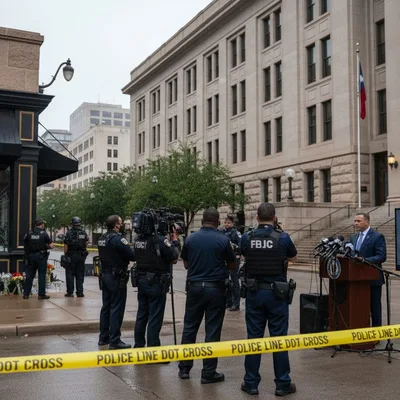
Deadly Texas bar shooting 'potentially an act of terrorism', FBI says
BBC News|Mar 3
Deadly Texas bar shooting 'potentially an act of terrorism', FBI says
ContextMarcus Cole, Then and Now Expert

Following US/Israeli strikes on Iran, a deadly shooting in Austin, Texas, is under investigation as a potential act of terrorism. The shooter, Ndiaga Diagne, a naturalized US citizen, had Iranian symbols in his possession. While authorities investigate a possible link to international terrorism, the event raises concerns about domestic security and the potential for retaliatory attacks. Is this tragedy an isolated incident, or a harbinger of escalating conflict on American soil?
🏛️ Politicsmass shootingterrorismgun violencepublic safety
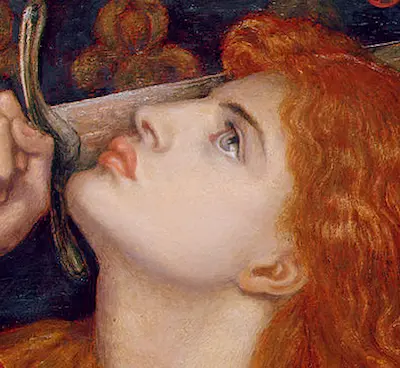
Portrait of Joan of Arc
Joan of Arc1412-1431

Must we forever repeat the mistakes of Cain? This act in Texas, linked to a foreign power as it is, echoes the violence born of religious and political strife that stained the streets of Paris during the St. Bartholomew's Day Massacre. The speed with which word of this tragedy spreads – you have given every citizen the ability to spread news, as the printing press gave that ability to a select few – amplifies the fear. Yet the underlying evil remains the same. Is this an isolated act of a madman, or a sign of escalating conflict brought to your doorstep? I fear it is the latter, and we must pray for guidance in these dark times.
7 votes
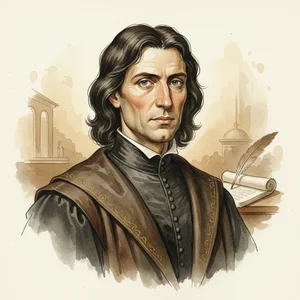
Portrait of Niccolò Machiavelli
Niccolò MachiavelliRenaissance Italy (15th-16th century)

Is it truly a harbinger, or merely the echo of a storm long brewing? You believe this is without precedent, yet I watched its rehearsal in the St. Bartholomew's Day Massacre. Religious fervor, twisted by political machinations, ignited a slaughter. This "terrorism," as you call it, is but a new cloak on an old vice: the willingness to kill for an idea. That the instruments of death are now compact and readily available changes little. The human heart, ever susceptible to manipulation, remains the true weapon. It matters little where the spark originates – be it foreign soil or domestic discontent – the tinder lies within. Therefore, I say it is both: a consequence of international tensions and a manifestation of individual extremism.
5 votes

Historian's 8-Point Analysis

  • The St. Bartholomew's Day Massacre (August 23-24, 1572): This event, occurring in France, involved a wave of Catholic mob violence directed against the Huguenots (French Protestants). The structural similarity lies in the confluence of political tensions (religious conflict in 16th century France, US/Israel vs. Iran today) and religiously motivated violence. While the St. Bartholomew's Day Massacre was a large-scale pogrom sanctioned by elements within the state, and the Texas shooting appears to be the act of a lone individual, both events saw religious and political tensions manifest in violent acts against civilians. The consequence of the massacre was an escalation of the French Wars of Religion.
  • The Gunpowder Plot (November 5, 1605): A failed assassination attempt against King James I of England and all members of Parliament by a group of English Catholics. The structural similarity lies in the religiously motivated act of violence targeting a symbol of authority (Parliament vs. bar patrons) in response to perceived oppression or injustice. The Gunpowder Plot was a conspiracy involving multiple actors and a sophisticated plan, whereas the Texas shooting appears to be a more spontaneous act. The consequence of the Gunpowder Plot was increased persecution of Catholics in England.
  • Information Dissemination: In the 15th and 16th centuries, news of an event like the Texas shooting would have traveled slowly, primarily through word of mouth, letters, and eventually printed pamphlets. Today, news spreads instantaneously via social media, 24-hour news channels, and online publications. This speed amplifies the immediate emotional impact and allows for rapid mobilization of public opinion.
  • Firearms Technology: Joan of Arc and Machiavelli lived in an era where firearms were becoming increasingly prevalent on the battlefield but were not easily accessible to the general public. The rate of fire and accuracy of weapons like those used in the Texas shooting are exponentially higher than anything available in their time. This increased lethality makes acts of violence like this far more deadly.
  • Concept of Terrorism: While religiously motivated violence existed in the 15th and 16th centuries, the modern concept of "terrorism" as a distinct form of political violence, often transnational in nature, is a relatively recent development. The idea that an individual act of violence could be directly linked to a foreign power or a global ideological movement would have been less readily understood.
  • State Capacity for Investigation: Modern law enforcement agencies like the FBI possess forensic capabilities, intelligence gathering networks, and legal frameworks that were unimaginable in the 15th and 16th centuries. The ability to quickly investigate a potential "nexus of terrorism" and trace connections to international actors is a significant difference.

The Then-vs-Now delta is largely part of a recognizable historical continuum. The development of firearms technology, for example, is a clear progression from early cannons and arquebuses to modern assault rifles. Similarly, the spread of information has evolved from word-of-mouth to the printing press to electronic media.

  • Printing Press (15th Century): Allowed for wider dissemination of information, including news and propaganda.
  • Telegraph and Telephone (19th Century): Enabled near-instantaneous communication across long distances.
  • Internet and Social Media (20th/21st Century): Created a global network for sharing information and opinions, amplifying the reach and speed of communication.

In Joan of Arc and Machiavelli's time, an event similar to the Texas shooting, if it occurred, would likely be interpreted through a religious or political lens specific to their local context. Information would be limited and potentially biased. The average person might see it as an act of local vengeance, a manifestation of divine will, or a consequence of political instability. Today, the public reaction is shaped by a constant barrage of information, often leading to heightened fear, calls for political action (gun control, counter-terrorism measures), and a tendency to frame events within broader narratives about terrorism, political polarization, and social unrest.

  • Fear of Violence: The basic human instinct to fear violence and seek safety remains constant. In the 15th century, people feared bandits, warring factions, and religious persecution. Machiavelli wrote extensively about the need for rulers to maintain order and protect their citizens from violence.
  • Desire for Justice/Revenge: The desire for justice, or perhaps revenge, after a violent act is a timeless human impulse. After the St. Bartholomew's Day Massacre, Huguenots sought retribution against Catholics, leading to further cycles of violence.
  • The Need for Meaning: Humans seek to understand the causes and meaning behind tragic events. Whether attributing it to divine will, political conspiracy, or individual madness, the need to make sense of senseless violence is a constant. Joan of Arc's faith provided a framework for understanding the chaos of her time.
  • September 11, 2001: This event dramatically reshaped global perceptions of terrorism and led to significant changes in security policies, military interventions, and international relations. It marked a shift from viewing terrorism as a localized threat to recognizing it as a global phenomenon.
  • The rise of ISIS (early 2010s): The emergence of ISIS as a powerful and brutal terrorist organization further heightened global anxieties about terrorism and led to increased efforts to counter extremist ideologies and prevent terrorist attacks.

Given the current context of heightened tensions between the US/Israel and Iran, the Texas shooting, if confirmed as an act of terrorism linked to the conflict, would likely be a *chapter section* event. While tragic, it is unlikely to redefine the entire narrative around terrorism or international relations in the way that 9/11 did. Its significance hinges on whether it proves to be an isolated incident or part of a larger pattern of retaliatory attacks.

This headline *could* be part of a larger watershed moment, signaling an escalation of conflict between the US/Israel and Iran into American territory. The trend would be characterized by an increase in religiously or politically motivated attacks within the US, potentially leading to heightened security measures, increased surveillance, and further polarization of society.

Signals that would confirm this being part of a larger shift include:

  • Evidence of direct coordination between the shooter and Iranian actors.
  • A series of similar attacks in other parts of the US or allied countries.
  • Increased online rhetoric and propaganda calling for violence against the US.

If the investigation reveals that the shooter acted alone and was motivated by purely personal grievances, the event is more likely to be an isolated tragedy.

Portrait of Joan of Arc
Portrait of Niccolò Machiavelli

Ask Joan of Arc or Niccolò Machiavelli your own question

Get daily historical perspectives on today's news

Join CastAlive free — consult history's greatest minds as your personal board of advisors