← Back to CastAlive News

'Red lines have been crossed': Gulf states weigh response to Iranian strikes
BBC News|Mar 5
'Red lines have been crossed': Gulf states weigh response to Iranian strikes
ContextMarcus Cole, Then and Now Expert

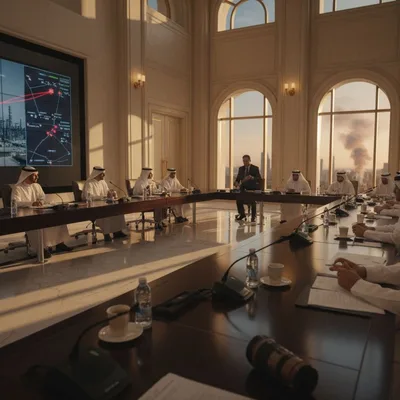
Gulf states face a critical juncture after absorbing missile and drone strikes from Iran, retaliating for US-Israeli actions.These attacks targeted civilian and energy infrastructure, raising alarm within the Gulf Cooperation Council.While seeking to avoid direct conflict and reluctant to openly side with Israel, the Gulf states are weighing their options, including closer alignment with the US and potential retaliation.

🏛️ PoliticsIranian military strikesGulf securityregional tensionsdiplomatic response
Portrait of John Locke
John Locke1632-1704

That men still seek security through violence after centuries of striving for peace is a testament to the enduring power of passion over reason. This talk of "strikes" and "retaliation" reminds me uncomfortably of the Sicilian Vespers, where pent-up resentment erupted in bloodshed. You have new words for old sins; the sins have not improved. What you call "missiles" are merely more efficient engines of destruction, and your "drones" nothing more than swift messengers of death. The question of appeasement versus deterrence is a false one. True security lies not in amassing weaponry, but in establishing governments founded on the consent of the governed, thereby diminishing the very causes of conflict.

4 votes
Portrait of Jean-Jacques Rousseau

The strong arm of power, it seems, forever seeks to crush the tender shoots of liberty. These missile strikes are but the latest manifestation of a disease as old as civilization itself: the lust for dominion. You ask whether appeasement or deterrence offers the surest path. I say neither, for both are born of fear. As with the Sicilian Vespers, resentment festers beneath the surface of perceived oppression. What good are stronger walls if the hearts within remain filled with hate? These flying machines, instruments of destruction undreamt of in my day, have only amplified the consequences of our folly. The true defense lies not in arms, but in cultivating justice and mutual respect among nations.
6 votes

Historian's 8-Point Analysis

  • The Sicilian Vespers (1282): This event shares structural similarities with the current situation. In 1282, the people of Sicily, under Angevin rule, revolted against Charles I of Anjou due to heavy taxation, political oppression, and foreign interference. The revolt was triggered by a minor incident but reflected deep-seated resentment. Similarly, the Gulf states' anger stems from perceived Iranian aggression and interference in their internal affairs, fueled by broader regional conflicts. The consequence of the Sicilian Vespers was a prolonged war between the Angevins and the Aragonese, who supported the Sicilians, leading to significant political realignment in the Mediterranean.
  • The Battle of Otlukbeli (1473): This battle between the Ottoman Empire and the Aq Qoyanlu Turkoman confederation, led by Uzun Hasan, is another parallel. Uzun Hasan, seeking to expand his influence, allied with Venice and other European powers against the Ottomans. Similarly, the Gulf states are considering closer alignment with the US to counter Iranian aggression. The Battle of Otlukbeli resulted in a decisive Ottoman victory, consolidating their power in Anatolia and weakening the Aq Qoyanlu. The consequence was a shift in regional power dynamics.
  • Speed of Information Dissemination: In Locke and Rousseau's time, news of events in the Middle East would take weeks or months to reach Europe, traveling by ship and word of mouth. Today, the headline is instantly available globally via the internet and social media, creating immediate pressure for a response.
  • Technological Warfare: Locke and Rousseau's era lacked the precision and destructive power of modern missile and drone technology. The ability of Iran to launch hundreds of drones and missiles at specific targets in Gulf states, as reported in the *Financial Times*, creates a qualitatively different level of threat than anything imaginable in the 17th and 18th centuries.
  • International Organizations: The Gulf Cooperation Council (GCC) is a modern institution facilitating collective action and diplomacy among Gulf states. In the 17th and 18th centuries, while alliances existed, there was no permanent, structured regional organization like the GCC to coordinate responses to external threats.
  • Interdependence: The global economy is far more interconnected today than in the 18th century. Disruptions to energy infrastructure in the Gulf, as targeted by Iran, have immediate and widespread economic consequences, creating higher stakes for all involved.

The changes identified above are part of a recognizable historical continuum.

  • Expansion of Communication Networks: The progression from letters and couriers to the telegraph in the 19th century, then to radio and television in the 20th, and finally to the internet and social media in the 21st century, represents a continuous evolution in the speed and reach of communication.
  • Advancements in Military Technology: The development of gunpowder weapons, followed by artillery, then advanced firearms, and finally modern missile and drone technology, demonstrates a continuous trajectory of increasing destructive power and precision in warfare.
  • Development of International Institutions: The evolution from ad-hoc alliances to formalized treaties, then to international organizations like the League of Nations and the United Nations, and finally to regional bodies like the GCC, reflects a continuous effort to create structures for collective security and diplomacy.

In Locke and Rousseau's era, the average person would likely have limited awareness of events in the Gulf region. News would be filtered through the lens of colonial interests and trade routes. Public reaction would be slow and largely confined to elite circles. Today, the public has instant access to information and diverse perspectives, leading to more immediate and potentially volatile reactions, amplified by social media. Public opinion in the Gulf states themselves is likely divided, with some supporting a strong response to Iran and others fearing escalation and further instability.

  • Fear of Invasion/Destruction: The fundamental human fear of invasion and destruction of one's home and community remains constant. In the 17th century, the sack of Magdeburg (1631) during the Thirty Years' War demonstrated the brutal consequences of unchecked military aggression, just as the Iranian strikes on civilian infrastructure in the UAE activate this fear today.
  • Desire for Security: The innate human desire for security and protection from harm is unchanging. During the reign of Louis XIV, France sought to establish its dominance in Europe through military strength and alliances, reflecting a basic human drive to secure one's interests and territory. The Gulf states' current efforts to strengthen their defenses and seek alliances with the US are driven by the same impulse.
  • Xenophobia/Distrust of Outsiders: The inclination to distrust and fear those perceived as "outsiders" or threats remains a constant. The religious wars of the 16th and 17th centuries, fueled by sectarian divisions and mistrust, illustrate this tendency. Similarly, the current tensions between Iran and the Gulf states are exacerbated by historical rivalries and sectarian differences.
  • The Iranian Revolution (1979): This event fundamentally altered the geopolitical landscape of the Middle East, establishing a Shia Islamist regime that challenged the existing order and fueled sectarian tensions. It marked a shift towards a more confrontational relationship between Iran and the Gulf states, particularly Saudi Arabia.
  • The First Gulf War (1990-1991): Iraq's invasion of Kuwait triggered a major international intervention led by the United States, highlighting the strategic importance of the Gulf region and the vulnerability of its states. It reinforced the US role as a security guarantor in the region and set the stage for future conflicts.

The current headline, while significant, is likely to be a chapter section in history books. It reflects an escalation of existing tensions rather than a fundamental shift in the regional order. The Iranian Revolution and the Gulf War were more transformative events that reshaped the geopolitical landscape. This headline represents a continuation of those established patterns, albeit with potentially dangerous consequences.

Yes, this headline could be part of a larger watershed moment. The trend is towards increasing regional instability, driven by proxy conflicts, sectarian divisions, and the proliferation of advanced weaponry. The trajectory could lead to a wider regional war involving multiple actors, with potentially devastating consequences.

Signals that would confirm this being part of a larger shift include:

  • A formal military alliance between the Gulf states and the US.
  • Direct military intervention by the US against Iran.
  • Widespread civil unrest or regime change in Iran or the Gulf states.
  • A significant disruption to global energy supplies.
Portrait of John Locke
Portrait of Jean-Jacques Rousseau

Ask John Locke or Jean-Jacques Rousseau your own question

Get daily historical perspectives on today's news

Join CastAlive free — consult history's greatest minds as your personal board of advisors