← Back to CastAlive News

Can Congress limit Trump in Iran? It would be a rare step
Can Congress limit Trump in Iran? It would be a rare step
ContextMarcus Cole, Then and Now Expert

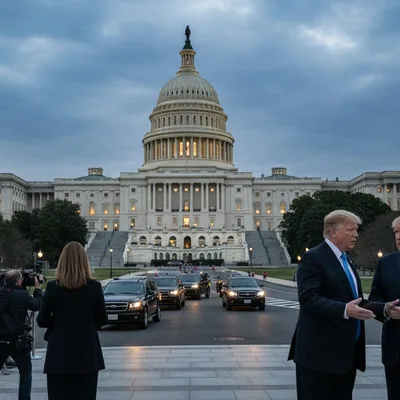
President Trump's authority to act unilaterally against Iran is again under scrutiny, echoing past congressional attempts to limit presidential war powers. Despite the War Powers Resolution, presidents have often acted without explicit congressional approval, leading to ongoing tensions. Attempts to constrain the executive branch in matters of war are historically rare. Given these precedents, can Congress effectively limit presidential power in matters of foreign policy and military action, or is executive dominance inevitable?
🏛️ PoliticsWar powerscongressional authorityexecutive power
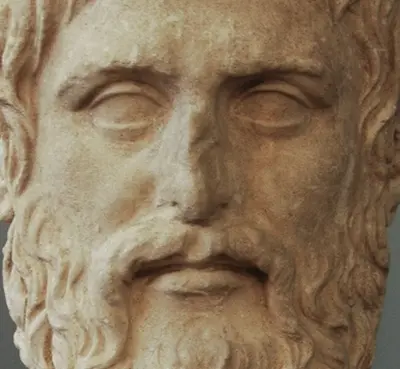
Portrait of Plato
Plato428-348 BCE

Is it not ever thus, that the few who wield power chafe at the restraints of the many? This "President Trump," as you call him, seeks to act as Dionysius of Syracuse, demanding guards to enforce his will, guards superior to any individual but inferior to the whole. As Aristotle observed, such power struggles are inherent to governance. Whether Congress can truly limit him is doubtful. The speed of your "global communication" creates a frenzy, a mob demanding immediate action, drowning out the measured deliberation needed for true justice. That the means of communication have altered so radically, while the underlying passions remain unchanged, is a grave concern. Executive dominance, therefore, seems all but inevitable.

3 votes
Portrait of John Locke
John Locke1632-1704

That men should seek to restrain power is not novel; that they so often fail is the tragedy. This "War Powers Resolution" reminds me somewhat of the Roman Senate's attempts to bridle Caesar – a man whose ambition outstripped their ability to contain it. Whether your Congress can truly limit this President’s actions in Persia, I cannot say. I do observe that swift conveyance of news – these "globalized 24/7 news media" – seem to amplify the passions of the moment, leaving little room for sober deliberation. This may tempt both the executive and legislative branches to rash decisions. Ultimately, the system of checks and balances can only function if those entrusted with power are willing to be checked.
6 votes

Historian's 8-Point Analysis

  • The Peloponnesian War (431-404 BCE): This war, partly fueled by Athenian expansionism and interference in the affairs of other city-states, mirrors the current tensions with Iran. The structural similarity lies in a powerful state (Athens/USA) engaging in actions perceived as aggressive by other actors, leading to potential conflict. Consequence: Decades of war that weakened all of Greece.
  • The English Civil War (1642-1651): This conflict was driven by disputes over the balance of power between the monarch (Charles I) and Parliament. Parliament's attempts to limit the King's power, particularly in matters of finance and military control, resonate with Congress's efforts to constrain Trump's war powers. Consequence: Temporary overthrow of the monarchy and establishment of a republic.
  • The Roman Senate and Caesar (59-44 BCE): Caesar's military successes and growing power alarmed the Senate, who feared his ambition would lead to tyranny. The Senate attempted to curtail Caesar's power, leading to a power struggle and ultimately Caesar's assassination. Consequence: End of the Roman Republic and the rise of the Roman Empire.
  • Speed of Communication: In Plato's time, news traveled slowly, relying on messengers and word of mouth. Locke's era saw the rise of the printing press, allowing for wider dissemination of information, but still relatively slow compared to today's instant global communication via the internet and social media. This impacts public opinion and the speed at which political events unfold, putting greater pressure on decision-makers.
  • Public Opinion Polling: Neither Plato nor Locke had access to systematic public opinion polling. Today, presidents and Congress are constantly bombarded with data on public sentiment, influencing their decisions. This creates a feedback loop where leaders react to public opinion, potentially hindering long-term strategic thinking.
  • Nuclear Weapons: The existence of nuclear weapons significantly alters the stakes of international conflict. In Plato's and Locke's times, wars were destructive, but the potential for total annihilation was absent. This creates a new level of caution (or recklessness) in foreign policy decision-making.
  • The War Powers Resolution (1973): This institutional change, absent in both Plato and Locke's time, attempts to codify the balance of power between the executive and legislative branches regarding military action. While its effectiveness is debated, it represents a formal constraint on presidential power that did not exist previously.

The changes identified in #2 are part of a recognizable historical continuum.

  • Communication: The progression from word-of-mouth to printing press to telegraph to internet represents a continuous acceleration in the speed and reach of communication.
  • Democratic Accountability: The evolution from limited participation in Athenian democracy to representative government in Locke's England to modern mass democracy with polling and media scrutiny shows a continuous expansion of accountability to the populace.
  • Weaponry: The escalation from swords and spears to cannons to machine guns to nuclear weapons demonstrates a continuous increase in destructive power.

In Plato's Athens, news of a potential conflict with Persia (a hypothetical parallel) would spread through the agora and public assemblies. Reactions would likely be shaped by personal experiences with war, loyalty to the city-state, and philosophical views on justice and governance. Information would be limited and subject to rumor.

In Locke's England, news of a potential conflict with France (another hypothetical parallel) would spread through newspapers and coffee houses. Reactions would be influenced by religious affiliations, economic interests, and political leanings. Information would be more readily available than in Plato's time, but still subject to censorship and propaganda.

Today, news of potential conflict with Iran is instantly accessible globally. Reactions are shaped by partisan affiliations, social media echo chambers, and pre-existing views on foreign policy. The range of responses is broader and more polarized, with rapid mobilization of online activism and counter-movements.

  • Fear of the Other: The tendency to distrust and demonize those perceived as different or foreign. In Plato's time, this manifested as prejudice against barbarians. Today, it fuels xenophobia and Islamophobia. Technology amplifies this fear through the spread of misinformation and hate speech.
  • Lust for Power: The desire for control and dominance over others. In Locke's era, this was evident in the ambitions of monarchs and empires. Today, it manifests in the pursuit of political office and economic influence. Technology provides new avenues for acquiring and wielding power, but the underlying drive remains the same.
  • Group Loyalty: The tendency to prioritize the interests of one's own group (city-state, nation, political party) over the interests of others. In Plato's Athens, this fueled inter-city-state rivalries. Today, it fuels nationalism and political polarization. Technology reinforces group loyalty through online communities and echo chambers.
  • The Treaty of Westphalia (1648): This treaty, ending the Thirty Years' War, established the modern system of nation-states and the principle of state sovereignty. It redirected the course of international relations away from religious wars and towards a more secular, power-based system.
  • The End of the Cold War (1991): The collapse of the Soviet Union marked a major shift in the global balance of power, leading to a period of American unipolarity. It redirected the course of international relations away from bipolar competition and towards a more complex, multipolar world.

The headline "Can Congress limit Trump in Iran? It would be a rare step" is likely of chapter section historical importance. While it reflects an ongoing tension between the executive and legislative branches, it does not represent a fundamental shift in the balance of power. It is a symptom of deeper trends, such as political polarization and the erosion of congressional authority, but it is unlikely to be remembered as a watershed event in its own right. The parallels with the English Civil War and the Roman Senate's conflict with Caesar suggest that such power struggles are recurring themes in history.

This headline could be part of a larger watershed moment if it signals a significant erosion of the War Powers Resolution and a further expansion of presidential authority in foreign policy. The trend is towards increasing executive power, particularly in the realm of national security. Potential impacts include more frequent and unilateral military interventions, reduced congressional oversight, and a weakening of international norms.

Signals that would confirm this being part of a larger shift include:

  • Repeated instances of presidents bypassing Congress in military actions.
  • Judicial rulings that further weaken the War Powers Resolution.
  • A decline in public and congressional support for congressional oversight of foreign policy.

Conversely, if Congress successfully asserts its authority and limits presidential power in this or future instances, it would suggest that the system of checks and balances is still functioning effectively, and this headline is an isolated event.

Portrait of Plato
Portrait of John Locke

Ask Plato or John Locke your own question

Get daily historical perspectives on today's news

Join CastAlive free — consult history's greatest minds as your personal board of advisors