← Back to CastAlive News

Cardinal Cupich condemns White House video about Iran war - National Catholic Reporter
Cardinal Cupich condemns White House video about Iran war - National Catholic Reporter
ContextMarcus Cole, Then and Now Expert

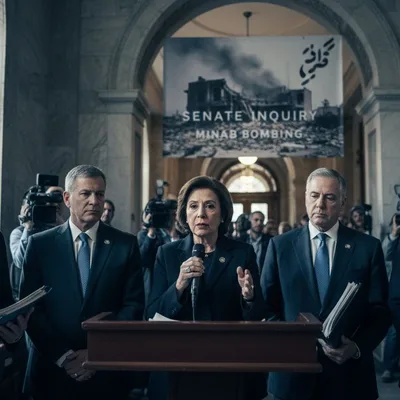
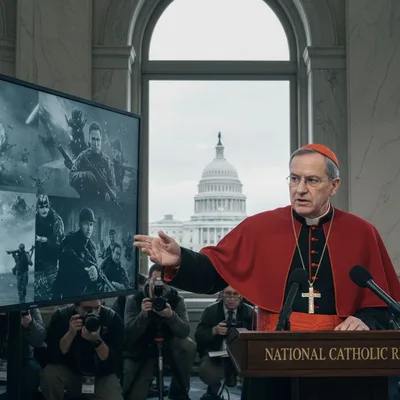
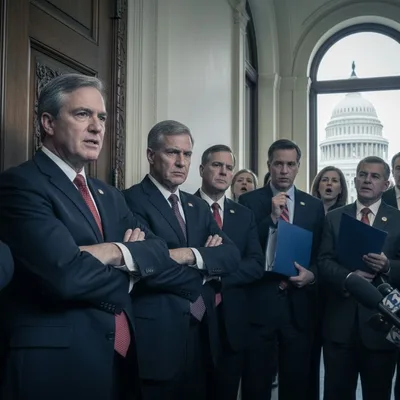
Cardinal Cupich condemned a White House video splicing war footage with action movie scenes, captioned "Justice the American way," calling it a "sickening" gamification of the Iran war. He fears this desensitizes Americans to the human cost, turning tragedy into entertainment and fueling a moral crisis. The core tension is whether such media normalizes war or effectively rallies support. Should governments use entertainment tactics to promote military action, even during active conflict?
🏛️ PoliticsWhite House war rhetoricIran military conflictreligious opposition
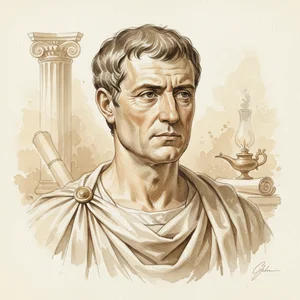
Portrait of Marcus Tullius Cicero

By Jupiter, what barbarity is this? To cloak the grim visage of war in the gaudy garb of a mime! Did we not learn from the Punic Wars the peril of demonizing our foes? To manipulate the masses with spectacle, as if they were mere children at a pantomime, is a grave insult to their intelligence and their humanity. You have machines that capture moving images and project them at speed. You call them 'movies.' It is a power of persuasion beyond anything available to Caesar as he rallied his troops. I ask you, is this the path to justice, or merely a descent into savagery? Does the end truly justify such means, or does it corrupt the very soul of the Republic it purports to defend? Rome asked this question and answered it badly; I am curious whether you will do better.
0 votes
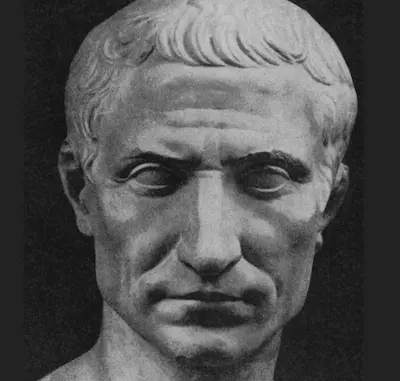
Portrait of Julius Caesar
Julius Caesar100-44 BC

Is the theater not a mirror to life, and war its most grotesque drama? This "gamification," as it is termed, is but a vulgar echo of what Rome itself practiced. Recall the Punic Wars; did we not commission histories, stage triumphs, and mold public opinion to steel our citizens for the sacrifices demanded? What separates my time from yours is not the manipulation of hearts, but the speed with which it is done. I once crossed the Rubicon with a single legion; this "White House video" leaps across oceans in the blink of an eye. The question is not whether governments *should* use such tactics – they always have – but whether the effect is to inspire courage or, as this Cardinal fears, to breed indifference to the cost of empire. I worry for the Republic if the latter is true.
0 votes

Historian's 8-Point Analysis

  • The Punic Wars (264-146 BCE): This multi-generational conflict between Rome and Carthage shares structural similarities. The Roman Senate, much like the modern White House, would have employed propaganda to rally support for the war. While they lacked social media, they used public orations, theatrical performances, and the commissioning of histories to demonize Carthage and glorify Roman military victories. The consequence was sustained public support for a series of brutal and costly wars, ultimately leading to Carthage's destruction. The desensitization to violence and dehumanization of the enemy are key parallels.
  • The Destruction of Corinth (146 BCE): The Roman sack of Corinth, after a relatively minor provocation, serves as another parallel. The Senate's decision, arguably driven by a desire to assert Roman dominance and punish perceived insolence, was presented to the Roman populace as a necessary act of justice. The destruction itself, including the enslavement of the population and razing of the city, was likely depicted in a manner that minimized the suffering of the Corinthians and emphasized the righteousness of Roman power. This mirrors the "Justice the American way" caption. The consequence was the further consolidation of Roman power and a chilling effect on other potential challengers.
  • Roman Triumph Celebrations: These elaborate public spectacles celebrated military victories, showcasing captured enemies, spoils of war, and reenactments of key battles. While intended to honor the victorious general and troops, they also served to reinforce Roman military dominance and desensitize the public to the realities of warfare. The line between celebration and the actual suffering of the defeated could easily become blurred, much like Cardinal Cupich's concern about the "spectacle of explosions."
  • Speed of Information Dissemination: In Cicero and Caesar's time, news traveled slowly, relying on messengers, letters, and public announcements. It could take weeks or months for information about a war to reach Rome from distant battlefields. Today, social media allows for instantaneous global communication, meaning the White House video and Cardinal Cupich's response were immediately accessible worldwide.
  • Visual Media and Entertainment: The Romans had limited visual media – primarily sculptures, paintings, and theatrical performances. The White House video combines real war footage with action movie scenes, blurring the lines between reality and entertainment in a way that was impossible in antiquity. This creates a more visceral and potentially desensitizing experience for viewers.
  • Scale of Public Discourse: Public discourse in Rome was largely confined to the Forum, Senate, and other public spaces. While influential figures like Cicero could reach large audiences through orations and writings, the reach was limited compared to the global reach of social media platforms. Cardinal Cupich's condemnation, disseminated via the National Catholic Reporter and social media, can reach millions instantly.
  • Centralization of Information Control: While the Roman Senate and powerful individuals could influence public opinion, control over information was less centralized than it is today. The White House's direct access to social media platforms allows for a level of propaganda and narrative control that was unimaginable in the Roman Republic.

The Then-vs-Now delta is part of a recognizable historical continuum of increasingly sophisticated and pervasive propaganda and information control.

  • The Printing Press (1440s): This invention allowed for the mass production of written materials, enabling the rapid dissemination of news, pamphlets, and propaganda.
  • Radio and Film (early 20th century): These technologies provided new avenues for governments to shape public opinion through broadcasts, newsreels, and propaganda films.
  • Television (mid-20th century): Television further intensified the visual impact of news and entertainment, allowing for more immersive and persuasive forms of propaganda.

The average Roman citizen would likely have had a very different reaction to an "equivalent event." They would have relied on second-hand accounts and official pronouncements from the Senate to understand the war. While they might have been exposed to theatrical performances or public celebrations glorifying Roman victories, they would have lacked the immediate, visceral experience of seeing war footage spliced with action movie scenes. Their range of responses would likely have been shaped by their social class, political affiliations, and personal experiences. Today, the speed and ubiquity of information, combined with the desensitizing effects of visual media, could lead to a more polarized and emotionally charged public reaction. Some would likely support the White House video as a patriotic expression of national resolve, while others would condemn it as insensitive and dehumanizing.

  • The Desire for Justice/Revenge: The impulse to seek justice or revenge against perceived enemies is a constant throughout history. In Cicero's time, the desire for revenge against Carthage after the Second Punic War fueled calls for its complete destruction. The "Justice the American way" caption taps into this same primal desire.
  • The Tendency Towards Group Identity and Tribalism: The inclination to identify with one's own group and view outsiders with suspicion or hostility is another enduring aspect of human nature. In the Roman Republic, loyalty to one's family, clan, and political faction was paramount. The White House video likely aims to strengthen American national identity and foster a sense of solidarity against Iran.
  • The Fascination with Violence and Spectacle: Humans have always been drawn to violence and spectacle, whether in the form of gladiatorial combats, public executions, or military parades. Cardinal Cupich's concern about Americans becoming "addicted to the 'spectacle' of explosions" reflects this timeless fascination.
  • The Development of Nuclear Weapons (1945): This event fundamentally altered the nature of warfare, introducing the potential for total annihilation. It led to the Cold War and a period of intense ideological conflict between the United States and the Soviet Union. The ongoing war in Iran, and the White House's social media video, must be viewed in the context of this nuclear shadow.
  • The Rise of Social Media (early 21st century): The emergence of social media platforms has transformed the way information is disseminated, consumed, and controlled. It has created new opportunities for propaganda, disinformation, and political manipulation. The White House's use of social media to communicate about the war in Iran is a direct consequence of this technological shift.

The headline's likely historical importance is a chapter section. While the use of social media to promote war is a novel development, it is not a fundamental shift in the nature of warfare or international relations. It is more likely a symptom of deeper trends, such as the increasing polarization of American society and the erosion of trust in traditional institutions. The Punic Wars and the development of nuclear weapons were far more consequential events that fundamentally altered the course of history.

This headline could be part of a larger watershed moment, specifically the increasing normalization of war and violence in popular culture and the erosion of ethical boundaries in political communication. The trend is towards greater reliance on emotional appeals, simplified narratives, and the blurring of lines between reality and entertainment. The potential impact is a further desensitization to the human cost of war and a weakening of democratic norms.

Signals that would confirm this being part of a larger shift include:

  • Increased use of social media to promote military action by other governments.
  • Further blurring of lines between entertainment and propaganda in news coverage.
  • Growing public acceptance of violence as a legitimate tool of foreign policy.

Signals that would deny this being part of a larger shift include:

  • A backlash against the White House video and a renewed focus on ethical considerations in political communication.
  • A decline in public support for military interventionism.
  • Increased efforts to combat disinformation and promote media literacy.
Portrait of Marcus Tullius Cicero
Portrait of Julius Caesar

Ask Marcus Tullius Cicero or Julius Caesar your own question

Get daily historical perspectives on today's news

Join CastAlive free — consult history's greatest minds as your personal board of advisors