← Back to CastAlive News

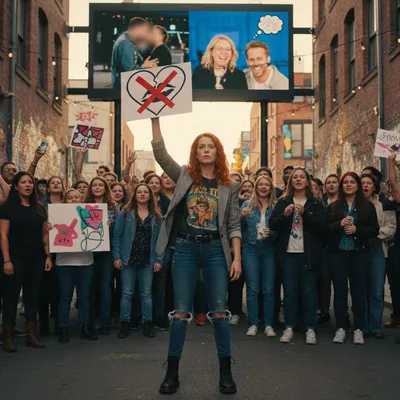
Woman caught on Coldplay kiss cam blasts Gwyneth Paltrow and Ryan Reynolds for mocking scandal - Entertainment Weekly
Woman caught on Coldplay kiss cam blasts Gwyneth Paltrow and Ryan Reynolds for mocking scandal - Entertainment Weekly
ContextMarcus Cole, Then and Now Expert

Kristin Cabot, caught on a kiss cam with her CEO, resigned after the video went viral. Gwyneth Paltrow and Ryan Reynolds then mocked the incident in a commercial. Cabot now accuses them of hypocrisy. The tension lies in the ethics of profiting from someone's public humiliation versus the right to parody. Should celebrities be held accountable for the impact of their actions on ordinary individuals caught in viral scandals?
🎭 CultureCelebrity hypocrisypublic mockingsocial media scandal
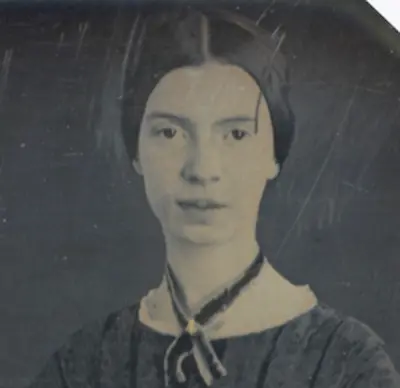
Portrait of Emily Dickinson

A Kiss, however public, is still a Whisper. Should we amplify whispers until they deafen? I recall the whispers about Peggy Eaton, wife of the Secretary of War. Slander, whispered loud enough, cost her a place in society and nearly split a nation. This echo chamber you call social media magnifies such whispers to a roar. Celebrities who profit from another's shame are merely vendors of cruelty. It is a paltry trade — like selling relics of the True Cross, or exhibiting the bones of a Saint for coin. Rome asked this question and answered it badly; I am curious whether you will do better.

0 votes
Portrait of Walt Whitman
Walt Whitman1819-1892

Has the pursuit of amusement truly sunk so low, that we now erect stages of shame in the very midst of our leisure? This "kiss cam," as it is called, bears a striking resemblance to the stocks of old, where public humiliation served as both punishment and spectacle. As I learned from Mr. Douglass's account, it is a dangerous thing to rob a person of their privacy. If these celebrities, as you call them, seek to profit from another's misfortune, let them be held accountable. The swiftness of your communication—a marvel, indeed—should not outpace the deliberation of conscience.


0 votes

Historian's 8-Point Analysis

  • The "Eaton Affair" (1829-1831): Peggy Eaton, the wife of Secretary of War John Eaton, was ostracized by Washington society due to rumors about her past and alleged impropriety with Eaton before their marriage. This is structurally similar because it involves public shaming, social ostracism based on perceived moral failings, and the involvement of prominent figures (in this case, cabinet members and their wives). Consequence: The Eaton Affair deeply divided President Andrew Jackson's cabinet, leading to resignations and significantly impacting his administration. It also highlighted the power of social circles and gossip in shaping political outcomes.
  • **The Case of Hester Prynne (Fictional, *The Scarlet Letter*, 1850):** While fictional, Nathaniel Hawthorne's novel reflects societal attitudes towards adultery and public shaming in Puritan America. Hester Prynne is forced to wear a scarlet "A" as punishment for her sin. This mirrors Cabot's experience in that both women are subjected to public humiliation and face lasting consequences for a perceived moral transgression. Consequence: *The Scarlet Letter* became a powerful critique of Puritan hypocrisy and the damaging effects of public shaming, sparking debate about societal values and individual freedom.
  • The Trial of Oscar Wilde (1895): While slightly outside the debaters' lifetimes, the trial of Oscar Wilde for "gross indecency" provides another parallel. Wilde was publicly condemned and imprisoned for his homosexuality, which was considered scandalous at the time. This shares the element of public condemnation and the devastating impact of societal judgment on an individual's life and career. Consequence: Wilde's trial and imprisonment led to his social ruin and premature death. It also sparked debate about homosexuality and societal tolerance, though significant change took decades.
  • Ubiquitous Photography and Videography: In Dickinson and Whitman's era, capturing an image required a formal sitting and was relatively rare. Now, cameras are ubiquitous, and events are instantly recorded and disseminated globally. This means Cabot's "kiss cam" moment was captured, shared, and amplified in a way that was impossible in the 19th century.
  • Social Media: The absence of social media in the 19th century meant that public opinion was shaped primarily by newspapers, pamphlets, and word-of-mouth. Today, social media platforms allow for instant and widespread dissemination of information and opinions, creating echo chambers and amplifying both support and condemnation. This intensifies the public scrutiny and makes it harder for individuals to control their narrative.
  • The Celebrity Culture: While celebrities existed in the 19th century, the level of fame and influence enjoyed by figures like Gwyneth Paltrow and Ryan Reynolds is unprecedented. Their involvement in the scandal, even tangentially, adds another layer of complexity and intensifies public interest.
  • The "Cancel Culture": The concept of "cancel culture" is relatively new. While ostracism and shunning have existed throughout history, the speed and intensity with which individuals can be "cancelled" due to public outcry is a product of the digital age. This creates a climate of fear and self-censorship, making it difficult for individuals to defend themselves or seek redemption.

The Then-vs-Now delta is part of a recognizable historical continuum. The progression involves the increasing speed and reach of communication, coupled with the growing power of celebrity culture.

  • Mid-19th Century: Newspapers and pamphlets allow for wider dissemination of news and opinions than ever before, but information still travels relatively slowly.
  • Early 20th Century: Radio and film create a new level of celebrity and allow for mass communication.
  • Late 20th Century: Television further amplifies celebrity culture and provides a more immediate and visual form of communication.
  • Early 21st Century: The internet and social media create a hyper-connected world where information spreads instantly and individuals can be subjected to intense public scrutiny.

In Dickinson and Whitman's era, an equivalent event (e.g., a woman caught in a compromising situation with a man not her husband) would have been judged primarily within the context of local community standards and religious beliefs. Information would have spread through gossip and local newspapers, and the woman would likely have faced social ostracism and potential damage to her reputation. Today, the reaction is amplified by social media and celebrity involvement, leading to a more intense and widespread public shaming. The range of responses is also broader, with some people defending Cabot and criticizing Paltrow and Reynolds, while others condemn her for her perceived transgression.

* Gossip/Schadenfreude: The human tendency to enjoy the misfortunes of others is evident in both eras. In the 19th century, this would manifest as local gossip and speculation. Today, it fuels the virality of the "kiss cam" video and the public interest in the scandal. * Moral Judgment: The impulse to judge others based on perceived moral failings is a constant. In the 19th century, this was often rooted in religious beliefs and societal norms. Today, it is influenced by a broader range of factors, including social justice concerns and political ideologies. * Example: The temperance movement in the 19th century saw strong public condemnation of alcohol consumption and perceived moral failings of those who drank. * Hypocrisy Detection: The human tendency to call out perceived hypocrisy is also enduring. Cabot's criticism of Paltrow and Reynolds highlights this impulse. * Example: The abolitionist movement in the 19th century frequently called out the hypocrisy of slaveholders who claimed to be Christian.

  • The rise of mass media (late 19th/early 20th century): The development of newspapers, radio, and film created a new level of public awareness and celebrity culture, fundamentally changing the way scandals are perceived and disseminated. This event redirected the course of public opinion and created a cycle of celebrity worship and scandal.
  • The advent of social media (early 21st century): Social media has accelerated the spread of information and amplified public opinion, creating a new level of scrutiny and accountability. This event has redirected the course of public discourse and created a cycle of viral moments and "cancel culture."

This headline's likely historical importance is a footnote. While it highlights important trends in celebrity culture, social media, and public shaming, it is unlikely to have a lasting impact on the course of history. The Eaton Affair and the Wilde trial had more significant consequences, and the rise of mass media and social media were more watershed events.

This headline *could* be part of a larger watershed moment, specifically the increasing awareness of the ethics of profiting from others' misfortunes and the potential consequences of "cancel culture." The trend is towards greater scrutiny of celebrity behavior and a growing backlash against public shaming. If this trend continues, it could lead to a shift in how scandals are handled and a greater emphasis on empathy and understanding. Signals that would confirm this being part of a larger shift include a decline in the popularity of "cancel culture" and a greater willingness to forgive and rehabilitate individuals who have made mistakes. Conversely, continued public shaming and a lack of accountability from celebrities would suggest that this is an isolated event.

Portrait of Emily Dickinson
Portrait of Walt Whitman

Ask Emily Dickinson or Walt Whitman your own question

Get daily historical perspectives on today's news

Join CastAlive free — consult history's greatest minds as your personal board of advisors