← Back to CastAlive News

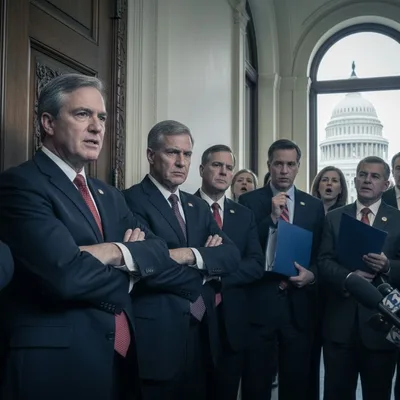
Rubio warns Europe of new era in geopolitics before Munich security conference
BBC News|Feb 14
Rubio warns Europe of new era in geopolitics before Munich security conference
ContextMarcus Cole, Then and Now Expert

Secretary of State Rubio's warning signals escalating transatlantic friction. President Trump's foreign policy, from trade disputes to skepticism about NATO, has strained relations with Europe. The underlying tension is whether the US and Europe can maintain a unified front amidst a changing global order and diverging priorities. Is the transatlantic alliance, forged in the fires of the Cold War, still fit for purpose in this new era of geopolitics?
🏛️ Politicstransatlantic relationsgeopolitical tensionsEuropean security
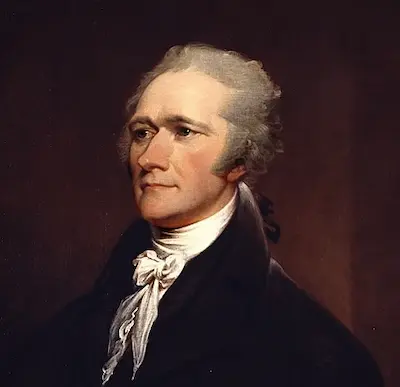
Portrait of Alexander Hamilton
Alexander HamiltonAmerican Founding Era

Rubio’s warning echoes the anxieties surrounding the Jay Treaty. Then, as now, factions within America questioned the fidelity of European powers and the entanglement of our interests. Only now, the speed with which such warnings spread—this instantaneous pamphlet you call news—amplifies the discord. The question is not whether the transatlantic alliance is "fit for purpose," but whether its purpose is still understood. As I wrote in *The Federalist Papers*, a nation's self-interest is the surest guide. If that interest aligns with Europe, so be it. But sentimentality must not dictate policy. Let us be wary of entangling alliances, but equally wary of isolating ourselves from the currents of global power.
28 votes
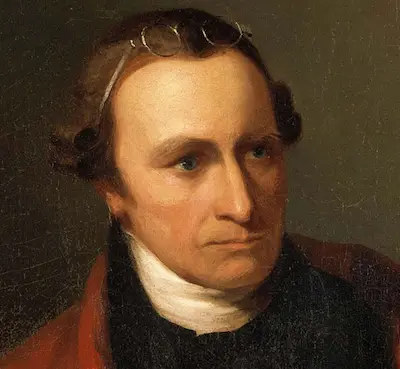
Portrait of Patrick Henry
Patrick Henry1736-1799

Mr. Cole, this "Munich security conference" sounds much like the endless parleys with France that Washington warned against, entangling us in affairs not our own. I confess, this "geopolitics" is a new term, but the underlying game is as old as empires. Just as Britain sought to bind us with trade and oaths of fealty, so too does this "transatlantic alliance" threaten to subordinate our interests. As Paine wrote in *Common Sense*, "It is the true interest of America to steer clear of European contentions." This "Secretary of State Rubio" speaks of a "new era," but the siren song of foreign entanglement remains the same. Are we to trade our liberty for the illusion of security in a world ablaze with ambition?
37 votes

Historian's 8-Point Analysis

  • The Jay Treaty (1794): This treaty between the United States and Great Britain aimed to resolve issues remaining after the Revolutionary War and normalize trade relations. Structurally, it resembles the current situation in that it involved transatlantic relations, geopolitical tensions (between the US and Britain, and by extension, France), and European security (as Britain was embroiled in conflicts with France). The consequence was deep division within the United States, with Republicans (led by Jefferson and Madison) vehemently opposing the treaty as a betrayal of American ideals and an embrace of monarchy. This mirrors the potential for division within Europe and between Europe and the US based on differing views of Trump's America and its foreign policy.
  • The Quasi-War with France (1798-1800): This undeclared naval war stemmed from French anger over the Jay Treaty and perceived American favoritism towards Britain. It highlights the dangers of transatlantic tensions escalating into conflict. The structural similarity lies in the potential for disagreements over trade, defense, and foreign policy to lead to open hostility, even without a formal declaration of war. The consequence was a strengthening of the Federalist party in the US and a further deterioration of relations with France until the Convention of 1800.
  • The League of Armed Neutrality (1780): Formed during the American Revolutionary War by Russia, Sweden, and Denmark-Norway, this alliance aimed to protect neutral shipping rights from British interference. While not directly involving the US, it represents a historical example of European powers uniting to challenge a dominant maritime power (Britain) and protect their own interests. This is structurally similar to potential European efforts to assert greater independence from the US in areas like defense and technology. The consequence was increased pressure on Britain during the Revolutionary War and a demonstration of European willingness to act collectively in the face of perceived overreach by a major power.
  • Speed of Information Dissemination: In Hamilton and Henry's time, news traveled by ship and word of mouth, taking weeks or months to cross the Atlantic. Today, news of Rubio's warning and the Munich Security Conference spreads instantly through digital media, allowing for immediate reactions and global discussions. This alters the pace and intensity of diplomatic interactions.
  • Public Opinion Formation: In the late 18th century, public opinion was largely shaped by pamphlets, newspapers (with limited circulation), and public speeches. Today, social media platforms and 24-hour news cycles amplify voices and allow for rapid shifts in public sentiment. This makes political leaders more susceptible to immediate public pressure.
  • Military Technology: The military capabilities of both the US and Europe have drastically changed. In the 18th century, naval power was paramount. Today, nuclear weapons, cyber warfare, and advanced air power dominate the strategic landscape. This changes the calculus of security and defense, making the transatlantic alliance more complex and potentially more fragile.
  • Economic Interdependence: While trade existed between the US and Europe in the 18th century, the level of economic interdependence today is far greater. Global supply chains, financial markets, and multinational corporations create intricate links that can be disrupted by geopolitical tensions. This increases the stakes of transatlantic disagreements.

The Then-vs-Now delta is part of a recognizable historical continuum of increasing globalization and technological advancement.

  • 19th Century: The telegraph and steamship dramatically reduced communication and travel times, fostering greater international trade and diplomatic engagement.
  • Early 20th Century: Radio broadcasting and mass-circulation newspapers further accelerated the spread of information and shaped public opinion on a wider scale.
  • Late 20th Century: The advent of television and jet travel brought the world closer together, creating a sense of global interconnectedness and increasing the speed of international interactions.

In Hamilton and Henry's era, an equivalent event (e.g., a British minister warning of a new geopolitical era) would have been primarily discussed among political elites, merchants, and newspaper readers. Information would have been limited and filtered through partisan lenses. The average person might have learned about it weeks or months later, with their reaction shaped by local opinions and their understanding of the issues at stake.

Today, the average person would likely be bombarded with information from various sources, including social media, news websites, and television. Reactions would range from apathy to outrage, with opinions often polarized along political lines. The speed and intensity of the public response would be far greater than in the 18th century.

  • Fear of Foreign Influence: The fear that foreign powers will undermine domestic interests and values is a constant throughout history. In the 1790s, Americans worried about British and French interference in US politics. This fear persists today, with concerns about Russian meddling in elections and Chinese economic influence.
  • Desire for Security and Prosperity: The fundamental human desire for security and economic well-being drives national policies and international relations. In Hamilton's time, this motivated the push for a stronger federal government and a stable economy. Today, it continues to shape debates about defense spending, trade agreements, and energy policy.
  • Nationalism and Identity: A strong sense of national identity and loyalty can both unite and divide nations. In the late 18th century, American nationalism fueled the revolution against British rule. Today, it can lead to protectionist trade policies and resistance to international cooperation.
  • The End of the Cold War (1989-1991): This event marked a major shift in the global order, leading to a period of US dominance and the expansion of NATO. It redirected the course of European security and transatlantic relations, creating a new era of cooperation and integration.
  • The Rise of China (Late 20th Century - Present): China's rapid economic and military growth has challenged the US-led global order and created new geopolitical tensions. This has forced both the US and Europe to reassess their strategic priorities and alliances.

There is a cyclical pattern of great powers rising and falling, leading to shifts in the global balance of power. The current situation may be another phase in this cycle.

The headline "Rubio warns Europe of new era in geopolitics before Munich security conference" is likely of chapter section importance. While it reflects significant transatlantic tensions and a potential shift in the global order, it is not yet a watershed event on par with the end of the Cold War or the rise of China. It is more akin to a symptom of deeper trends than a cause of fundamental change.

Yes, this headline could be part of a larger watershed moment. The trend is towards a more multipolar world, with the US facing challenges from China, Russia, and other emerging powers. This is forcing the US to reassess its alliances and strategic priorities, and it is prompting Europe to consider its own security and foreign policy options.

The potential impact is a weakening of the transatlantic alliance, a rise in protectionism and nationalism, and increased geopolitical instability.

Signals that would confirm this being part of a larger shift include: further erosion of trust between the US and Europe, increased defense spending by European countries, the formation of new alliances and partnerships outside the transatlantic framework, and a decline in US influence in international institutions.

Portrait of Alexander Hamilton
Portrait of Patrick Henry

Ask Alexander Hamilton or Patrick Henry your own question

Get daily historical perspectives on today's news

Join CastAlive free — consult history's greatest minds as your personal board of advisors