← Back to CastAlive News

Rethinking Youth Privacy

Rethinking Youth Privacy
ContextMarcus Cole, Then and Now Expert

The headline "Rethinking Youth Privacy" reflects growing concerns about children's data in the digital age.The FTC's amended COPPA rule, with compliance due April 2026, expands protections, but many argue it's not enough.States are enacting stricter laws, facing legal challenges.The core tension lies between protecting vulnerable youth and preserving free access to information.Given these escalating regulations, should the government further restrict online data collection from minors, even if it limits access to information and services.
🏛️ Politicsyouth privacy rightsdata protectiondigital ethics
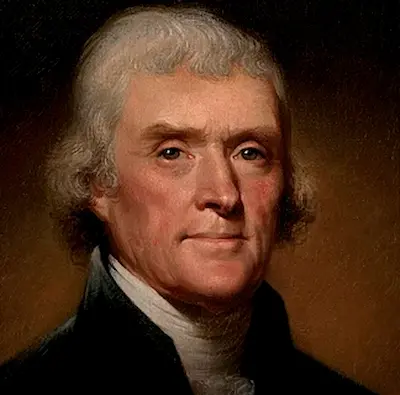
Portrait of Thomas Jefferson

Has the paternal hand of government become so clumsy it must now rummage through the playthings of our children? The question before us – whether to further restrict online data collection from minors – is not novel. We have long debated the proper scope of protection for the young, as evidenced by the regulations governing apprenticeships, which sought to balance opportunity with oversight. These "smart phones" and "social media" strike me as ubiquitous town squares, humming with both enlightenment and folly. While the desire to shield our youth from harm is laudable, might we risk stifling their ability to navigate the world and think for themselves? I confess I do not grasp the full implications of these digital innovations, but I remain wary of any measure that unduly limits access to information, even with the best intentions.
37 votes
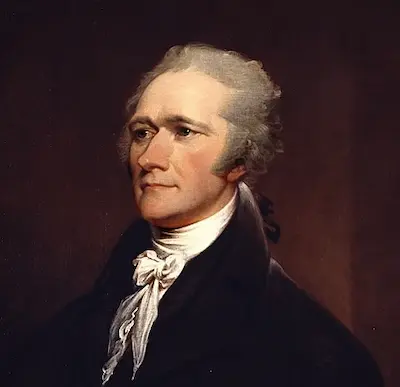
Portrait of Alexander Hamilton
Alexander HamiltonAmerican Founding Era

Must we coddle every fleeting fancy of youth, lest they stumble on a harsh word? The question before us is not merely about data, but about the very nature of liberty and the role of government in shaping it. I recall the apprenticeship system, where young men were bound by contract, their lives subject to regulation for their own supposed betterment. Now, you speak of "algorithms" that predict behavior. I confess I do not grasp the inner workings of these devices, but the principle is familiar: control through knowledge. Should the government further restrict this "data collection," even if it limits access? I say, with caution. Overzealous protection breeds dependence, not independence. Let us not suffocate the spirit of inquiry in the name of safety.

25 votes

Historian's 8-Point Analysis

  • The Regulation of Apprenticeships (16th-18th Centuries): Similar to the modern debate on youth privacy, apprenticeship regulations involved the state and guilds in controlling aspects of young people's lives, including their labor, education, and personal conduct. These regulations aimed to protect youth from exploitation and ensure they were properly trained, but also limited their autonomy and privacy. Consequence: These regulations shaped the economic and social structure of early modern Europe, influencing the development of skilled labor and social hierarchies.
  • Compulsory Education Laws (17th-19th Centuries): The advent of compulsory education, beginning in Prussia in the 18th century and spreading throughout Europe and America in the 19th, involved the state in the lives of children in an unprecedented way. While intended to promote literacy and civic virtue, these laws also meant increased surveillance and control over children's time and activities. Consequence: These laws led to increased literacy rates and a more educated populace, but also sparked debates about parental rights and the role of the state in child-rearing.
  • Censorship of Books and Publications (Various Periods): Throughout history, authorities have sought to control the information available to the public, including young people. Censorship of books and pamphlets, particularly those deemed morally corrupting or politically subversive, was common. Consequence: This led to suppression of dissenting ideas and limited access to information, but also spurred underground networks of distribution and resistance.
  • Ubiquitous Surveillance: In Jefferson and Hamilton's time, surveillance was largely limited to physical observation. Today, digital technologies enable constant and pervasive tracking of youth activities, preferences, and communications. This represents a qualitative shift in the scope and intensity of surveillance.
  • Data Aggregation and Analysis: The ability to collect, store, and analyze vast amounts of data was non-existent in the 18th century. Today, algorithms can predict behavior, target advertising, and even influence opinions based on data collected from youth online. This capability creates new risks of manipulation and discrimination.
  • Global Reach: Information in the 18th century spread relatively slowly and was limited by geography. Today, information can be disseminated instantly to a global audience, making it difficult to control the spread of harmful content or protect youth from online predators.
  • Commercialization of Childhood: The modern digital landscape is driven by advertising and monetization, leading to the commercialization of childhood. Children are constantly exposed to marketing messages and encouraged to consume goods and services, raising concerns about exploitation and the erosion of innocence.

The Then-vs-Now delta is part of a recognizable historical continuum of increasing state and societal interest in the welfare, education, and control of youth.

  • Early Printing Press (15th Century): The advent of the printing press allowed for wider dissemination of information and ideas, leading to increased concerns about the moral and intellectual development of young people.
  • Rise of Public Schools (19th Century): The establishment of public school systems further increased the state's involvement in the lives of children, shaping their education and socialization.
  • Radio and Television (20th Century): The introduction of radio and television brought new forms of entertainment and information into the home, raising concerns about the influence of media on children.

In Jefferson and Hamilton's era, an equivalent event (e.g., a new type of publication targeting youth) would have likely elicited concern among parents and religious leaders about moral corruption. Information would have spread through word-of-mouth, sermons, and pamphlets. The range of responses would have been limited to boycotts, censorship attempts, and moral exhortations. Today, public reaction is amplified and accelerated by social media. Concerns about privacy, data security, and mental health are prevalent. Responses include online petitions, advocacy campaigns, and calls for government regulation.

  • Protectiveness Towards Children: The instinct to protect children from harm and ensure their well-being is a constant across eras. In the 18th century, this manifested in concerns about the influence of "corrupting" literature. Today, it manifests in concerns about online predators and harmful content.
  • Desire for Autonomy: The desire for autonomy and self-determination is a fundamental human trait. In the 18th century, this was evident in young people's resistance to parental authority and societal norms. Today, it manifests in young people's desire to express themselves online and control their digital identities.
  • Susceptibility to Influence: Human beings, especially young people, are susceptible to influence from peers, authority figures, and media. In the 18th century, this was evident in the influence of Enlightenment ideas on young intellectuals. Today, it manifests in the influence of social media influencers and online trends.
  • The Enlightenment (18th Century): The Enlightenment emphasized reason, individual rights, and the importance of education. This led to new ideas about childhood and the role of the state in promoting individual development. This can be seen as a cyclical pattern, with periods of greater emphasis on individual liberty followed by periods of greater social control.
  • The Industrial Revolution (19th Century): The Industrial Revolution led to increased urbanization and the exploitation of child labor. This sparked reforms aimed at protecting children and regulating their employment. This can be seen as a cyclical pattern, with periods of economic growth followed by periods of social reform.

Today's headline, while significant, likely represents a *chapter section* in the ongoing history of youth rights and data protection. It builds upon existing laws and regulations (COPPA) and reflects a growing awareness of the challenges posed by digital technologies. However, it is unlikely to fundamentally alter the course of history in the same way as the Enlightenment or the Industrial Revolution.

Yes, this headline is likely part of a larger watershed moment: the increasing regulation of the digital sphere, particularly concerning youth. The trend is toward greater scrutiny of data collection practices, stricter enforcement of privacy laws, and the development of age-appropriate design standards. This trend could lead to a more regulated internet, with greater protections for children and teens. Signals that would confirm this include further legislative action at the state and federal levels, increased enforcement by regulatory agencies, and growing public awareness of the risks posed by digital technologies. A decline in public concern or a successful legal challenge to existing regulations could deny this.

Portrait of Thomas Jefferson
Portrait of Alexander Hamilton

Ask Thomas Jefferson or Alexander Hamilton your own question

Get daily historical perspectives on today's news

Join CastAlive free — consult history's greatest minds as your personal board of advisors