← Back to CastAlive News

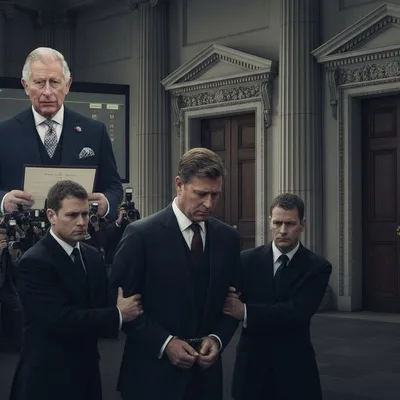
How much could Andrew's arrest hurt the Royal Family?
BBC News|Feb 21
How much could Andrew's arrest hurt the Royal Family?
ContextMarcus Cole, Then and Now Expert

Andrew Mountbatten-Windsor, stripped of royal titles in 2025, was arrested February 19th on suspicion of misconduct in public office.King Charles issued a statement expressing concern and support for the investigation.While the King is attempting to distance the monarchy, Andrew’s past role and familial ties complicate this separation.The underlying tension is whether individual scandals can truly be isolated from the institution of the Crown.Given these events, how much will Andrew's arrest *actually* hurt the Royal Family.

👑 CivilityRoyal Family scandalarrestinstitutional reputation damage
Portrait of Abigail Adams

The degree to which Andrew's disgrace will harm the Royal Family depends entirely upon the character of the Crown itself. If the monarchy is seen as a symbol of virtue, integrity, and service, then it can weather this storm, albeit bruised. However, if the Crown is perceived as merely a vessel of privilege and entitlement, then Andrew's actions will further erode public trust. Ultimately, the long-term damage hinges on the King's ability to demonstrate that the institution is more than the sum of its individual members' failings.

26 votes
Portrait of Mary Wollstonecraft

That the actions of one man, particularly one born into privilege, should threaten an entire institution is a testament to the fragility of power built on anything other than merit and virtue. Andrew's arrest, I daresay, will wound the Royal Family deeply, not because he is an indispensable figure, but because it exposes the rot at its core. It highlights the hypocrisy of a system that claims moral authority while shielding those who abuse their positions. The public, no longer as easily swayed by titles and ceremony, will see this as further evidence of the need for reform, or perhaps, a complete dismantling of such antiquated structures.


27 votes

Historian's 8-Point Analysis

  • The Abdication Crisis (1936): King Edward VIII's decision to abdicate the throne to marry Wallis Simpson, a divorced American socialite, bears a structural similarity to the current situation. Both events involve a member of the Royal Family causing a crisis due to personal actions that clash with the perceived duties and expectations of the monarchy. In 1936, the crisis stemmed from Edward VIII's desire to marry someone deemed unsuitable; in 2026, it's Andrew's alleged misconduct in public office. The consequence in 1936 was Edward's abdication and the ascension of George VI, which arguably strengthened the monarchy in the long run by reaffirming its commitment to duty and tradition.
  • The Affair of the Diamond Necklace (1785): This scandal in pre-revolutionary France involved Queen Marie Antoinette (though she was likely innocent). A necklace was fraudulently obtained using her name, and the ensuing scandal severely damaged her reputation and that of the monarchy. Structurally, both events involve allegations of impropriety (real in Andrew's case, falsely attributed in Marie Antoinette's) impacting the perceived integrity of the royal family. The consequence was a further erosion of public trust in the French monarchy, contributing to the revolutionary fervor.
  • The Divorce of Henry VIII (1533-1536): While the nature of the scandals are different, the structural similarity lies in the monarch making a decision that directly impacts the public image and stability of the monarchy. Henry VIII's decision to divorce Catherine of Aragon and marry Anne Boleyn led to the English Reformation and a significant shift in the power dynamics between the monarchy and the Catholic Church. The consequence was a restructuring of the Church of England and the consolidation of royal power.
  • Mass Media and Social Media: In the eras of Abigail Adams and Mary Wollstonecraft, news dissemination was slow and limited to printed materials and word-of-mouth. Today, the internet and social media provide instant access to information and opinions worldwide. This means the scandal surrounding Andrew spreads rapidly and globally, amplifying its impact on the Royal Family's reputation.
  • Increased Scrutiny of Public Figures: The 18th century had its share of scandals, but the level of public scrutiny of public figures, particularly royalty, has increased exponentially. The rise of investigative journalism, coupled with the 24/7 news cycle and social media, means that every aspect of a royal's life is subject to intense public examination.
  • Shifting Attitudes Towards Royalty: While royalty still held considerable power and influence in the 18th century, the Enlightenment ideals of equality and individual rights were beginning to challenge traditional hierarchies. Today, these ideals are even more deeply ingrained in Western societies, leading to greater skepticism and criticism of inherited privilege and power. The Ipsos poll showing a decline in support for the monarchy (37% vs 47% previously) reflects this shift.

The Then-vs-Now delta is part of a recognizable historical continuum.

  • 19th Century: The rise of mass media (newspapers, telegraph) increased the speed and reach of news dissemination, leading to greater public awareness of royal scandals.
  • Early 20th Century: The advent of radio and cinema further amplified the public's exposure to royal affairs, making them more accessible and relatable.
  • Late 20th Century: Television brought royal events into people's homes, creating a sense of intimacy and immediacy that further heightened public interest and scrutiny.

In the eras of Abigail Adams and Mary Wollstonecraft, news of Andrew's arrest would have taken weeks, if not months, to reach the average person. Information would have been filtered through newspapers and rumors, potentially distorted in the process. Public reaction would have been limited to discussions in taverns, coffee houses, and private homes. Today, the public has instant access to information and can express their opinions on social media, creating a global conversation about the scandal. Furthermore, the public today expects a higher level of transparency and accountability from public figures, including royalty.

  • Schadenfreude: The pleasure derived from the misfortune of others. In the 18th century, the public often reveled in the scandals of the aristocracy, seeing it as a comeuppance for their privileged status. For example, the public delight in the downfall of figures like the Earl of Sandwich, known for his scandalous behavior, demonstrates this trait.
  • Gossip and Rumor: The human desire to spread and consume gossip and rumors has remained constant throughout history. Whether it's whispered conversations in drawing rooms or viral tweets, people are drawn to scandalous stories, especially those involving powerful figures. The circulation of pamphlets and broadsides detailing alleged affairs and intrigues in the 18th century is a testament to this enduring human trait.
  • Moral Outrage: A sense of indignation at perceived wrongdoing. In the 18th century, figures like Mary Wollstonecraft expressed moral outrage at the injustices and inequalities of society. Today, this same impulse drives public condemnation of Andrew's alleged misconduct in public office.
  • The French Revolution (1789-1799): This event fundamentally altered the relationship between monarchs and their subjects, demonstrating the potential consequences of unchecked power and privilege. It ushered in an era of republicanism and challenged the legitimacy of hereditary rule.
  • The Profumo Affair (1963): This British political scandal involving a government minister and a prostitute shook public confidence in the establishment and led to increased scrutiny of public figures' private lives. It highlighted the potential for personal scandals to undermine political authority.

The headline's likely historical importance is a chapter section. While the arrest of Andrew is a significant event for the Royal Family and the British monarchy, it is unlikely to have the same transformative impact as the French Revolution or even the Profumo Affair. It is more likely to be remembered as a particularly damaging scandal that contributed to a broader trend of declining public trust in institutions.

Yes, this headline could be part of a larger watershed moment. The trend is a gradual erosion of public trust in institutions, including the monarchy, driven by factors such as increased transparency, heightened expectations of accountability, and a growing skepticism of inherited privilege. The potential impact is a further decline in the monarchy's relevance and legitimacy, potentially leading to calls for reform or even abolition. Signals that would confirm this being part of a larger shift include continued decline in public support for the monarchy, increased media scrutiny of royal finances and activities, and growing political pressure for reform.

Portrait of Abigail Adams
Portrait of Mary Wollstonecraft

Ask Abigail Adams or Mary Wollstonecraft your own question

Get daily historical perspectives on today's news

Join CastAlive free — consult history's greatest minds as your personal board of advisors