← Back to CastAlive News

Students in Savannah grieve teacher killed in crash with driver pursued by ICE
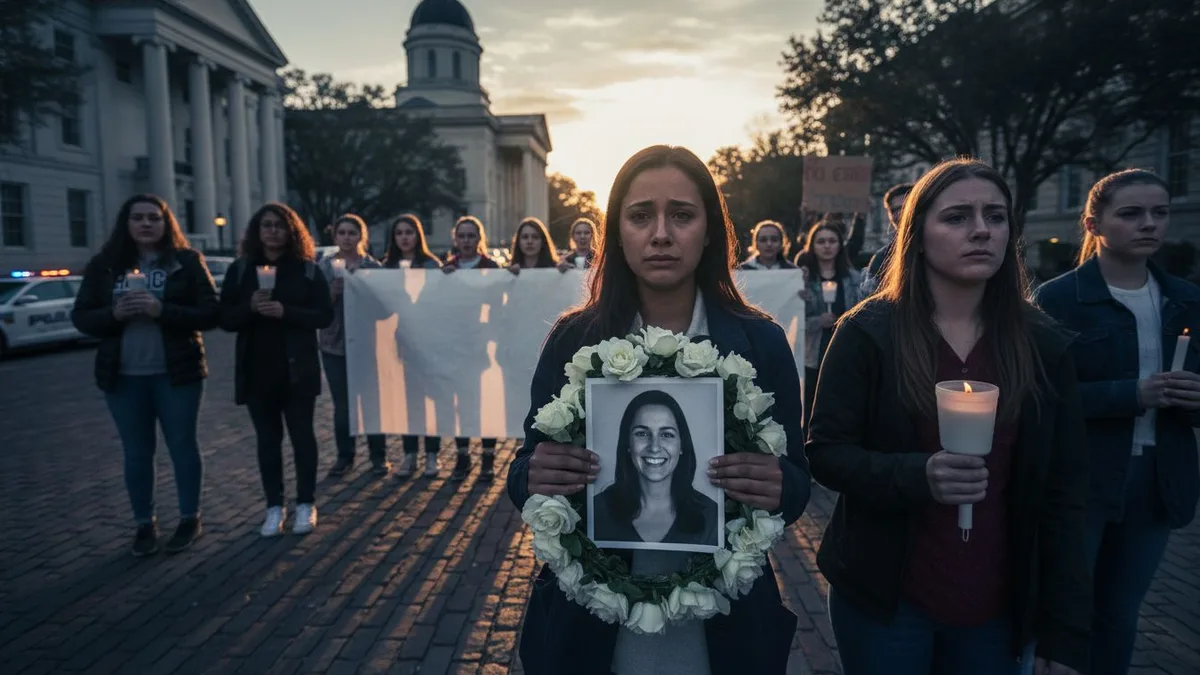
Students in Savannah grieve teacher killed in crash with driver pursued by ICE
ContextMarcus Cole, Then and Now Expert

A teacher in Savannah, Georgia, was killed when a car fleeing ICE agents crashed into her vehicle.The driver, a Guatemalan man with a deportation order, faces homicide charges.This tragedy reignites the debate over the role and methods of ICE, and the balance between immigration enforcement and public safety.The core tension lies in differing views on federal authority versus individual rights.Should ICE's enforcement priorities override the potential risks to communities, even if unintended.
🏛️ Politicsimmigration enforcementtraffic safetyteacher death
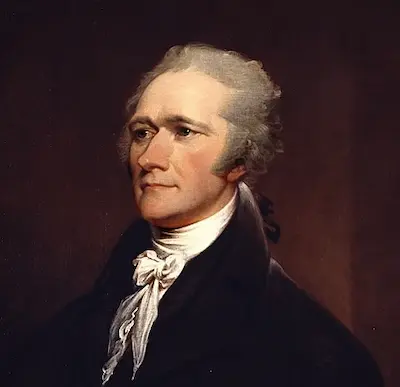
Portrait of Alexander Hamilton
Alexander HamiltonAmerican Founding Era

Must order always be purchased at the cost of liberty? The death in Savannah is a tragedy, and my condolences extend to the teacher's family. Yet, we must not allow emotion to cloud our judgment. This incident, wherein a man fleeing authorities caused the death of an innocent, recalls the Boston Massacre, where passions inflamed by a single incident threatened to engulf the colonies. You have constructed conveyances, these "automobiles", of astonishing speed. The risks attendant to such speed must be managed, and laws must be enforced, lest anarchy reign. The question is not whether laws should be enforced, but whether the potential risks to communities outweigh the necessity of securing our borders. I maintain that a nation without borders is no nation at all.
24 votes
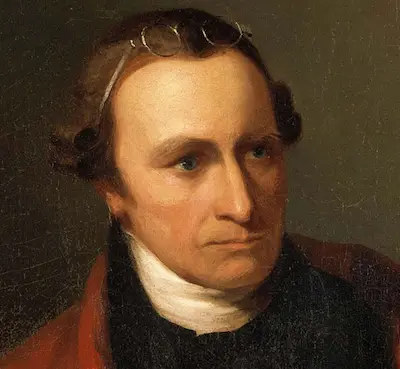
Portrait of Patrick Henry
Patrick Henry1736-1799

Has the Crown not taught us the peril of unchecked authority, writ in blood upon the streets of Boston? This tragedy in Savannah echoes that grim lesson. Though these "ICE agents" wield no muskets, their aggressive pursuit, fueled by distant directives, has yielded the same bitter fruit: innocent blood. I confess I do not fully grasp these "automobiles" that carry men at such speed, yet I understand the impulse to flee oppression. Is aggressive enforcement worth this price? It is a question of justice, and of the inherent value of every life, be they citizen or stranger seeking refuge. Let us not sacrifice liberty upon the altar of security.
22 votes

Historian's 8-Point Analysis

* The Boston Massacre (1770): British soldiers fired on a crowd of civilians, resulting in several deaths. * Structural Similarity: Both involve a death resulting from actions by an authority figure (British soldiers/ICE agent) and spark public outrage, raising questions about the legitimacy and consequences of government power. * Consequence: Increased tensions between colonists and the British government, contributing to the growing unrest that led to the American Revolution.

* The Alien and Sedition Acts (1798): A series of laws passed by the Federalist-controlled Congress that restricted immigration and limited freedom of speech and the press. * Structural Similarity: Both involve federal laws (Alien and Sedition Acts/immigration laws) that are perceived by some as infringing on individual liberties and targeting specific groups (immigrants). * Consequence: Public backlash against the Federalist Party, contributing to Thomas Jefferson's victory in the 1800 election and the eventual repeal or expiration of the Acts. Tyler notes that Patrick Henry was concerned about these acts, calling them "awful" and "calculated to subvert the public liberty".

  • Speed and Reach of Information: In the late 18th century, news traveled slowly via printed pamphlets, newspapers, and word-of-mouth. Today, news of the Savannah incident spreads instantly through social media, 24-hour news channels, and online publications, amplifying public reaction and political discourse.
  • Federal Law Enforcement Presence: While customs officials existed during the founding era, the concept of a large, federal law enforcement agency like ICE, with broad authority over immigration enforcement, is a modern development. This difference shapes the debate surrounding the incident, as the legitimacy and scope of ICE's powers are central to the controversy.
  • Sophistication of Transportation: The existence of automobiles and modern roadways introduces a new level of danger and potential for high-speed chases compared to the horse-drawn carriages of the 18th century. This technological difference directly contributed to the severity of the incident.

The evolution of federal law enforcement is part of a recognizable historical continuum.

  • Early Republic: Limited federal law enforcement, primarily focused on customs and postal services.
  • 19th Century: Gradual expansion of federal law enforcement with the creation of agencies like the Secret Service and the Bureau of Investigation.
  • 20th & 21st Centuries: Significant growth of federal law enforcement agencies, including the creation of the FBI, DEA, and ICE, reflecting increasing federal power and responsibilities.

In the late 18th century, news of a similar incident involving a death caused by government action would have spread slowly and primarily through local channels. Public reaction would have been largely confined to the immediate community and surrounding areas, with limited opportunity for widespread mobilization or national debate. Today, the Savannah incident triggers immediate national attention, fueled by social media and partisan news outlets, leading to rapid polarization and calls for action from across the country.

  • Grief and Empathy: The death of a teacher, especially one described as kind and dedicated, elicits grief and empathy regardless of the era. Even in the 18th century, the loss of a respected community member would have been deeply felt.
  • Xenophobia/Nativism: Fear and suspicion of foreigners is a recurring theme in history. The Alien and Sedition Acts, passed during the Adams administration, demonstrate that anti-immigrant sentiment existed even in the early years of the United States.
  • Desire for Justice: The desire for justice and accountability is a fundamental human impulse. Whether it's seeking punishment for the perpetrator or demanding systemic changes to prevent future tragedies, people in both the 18th century and today are driven by a sense of fairness and a need for resolution.
  • Immigration and Nationality Act of 1952 (McCarran-Walter Act): This act, passed during the Cold War, reaffirmed the national origins quota system and expanded the grounds for deportation. It marked a significant shift towards stricter immigration control and set the stage for future debates about immigration policy.
  • Immigration Reform and Control Act of 1986 (IRCA): This act attempted to address illegal immigration by granting amnesty to undocumented immigrants who had resided in the United States continuously since January 1, 1982, and by imposing sanctions on employers who hired undocumented workers. While it provided a path to citizenship for some, it also laid the groundwork for increased border enforcement and employer verification systems.

The Savannah headline is likely a chapter section in the ongoing history of immigration debates in the United States. While tragic and impactful on the local community, it is unlikely to fundamentally alter the course of national policy or reshape public opinion in a lasting way. The Boston Massacre, by comparison, was a chapter-defining event.

This headline could be part of a larger watershed moment if it triggers a significant shift in public opinion or policy regarding immigration enforcement. Signals that would confirm this include:

  • A sustained increase in public support for stricter immigration controls or, conversely, for comprehensive immigration reform.
  • Legislative action at the state or federal level to restrict ICE's powers or to provide greater protections for undocumented immigrants.
  • A change in the national political discourse surrounding immigration, with a greater emphasis on human rights and due process.

Without these signals, the Savannah incident is likely to remain an isolated tragedy, albeit one that contributes to the ongoing debate about immigration policy in the United States.

Portrait of Alexander Hamilton
Portrait of Patrick Henry

Ask Alexander Hamilton or Patrick Henry your own question

Get daily historical perspectives on today's news

Join CastAlive free — consult history's greatest minds as your personal board of advisors