← Back to CastAlive News

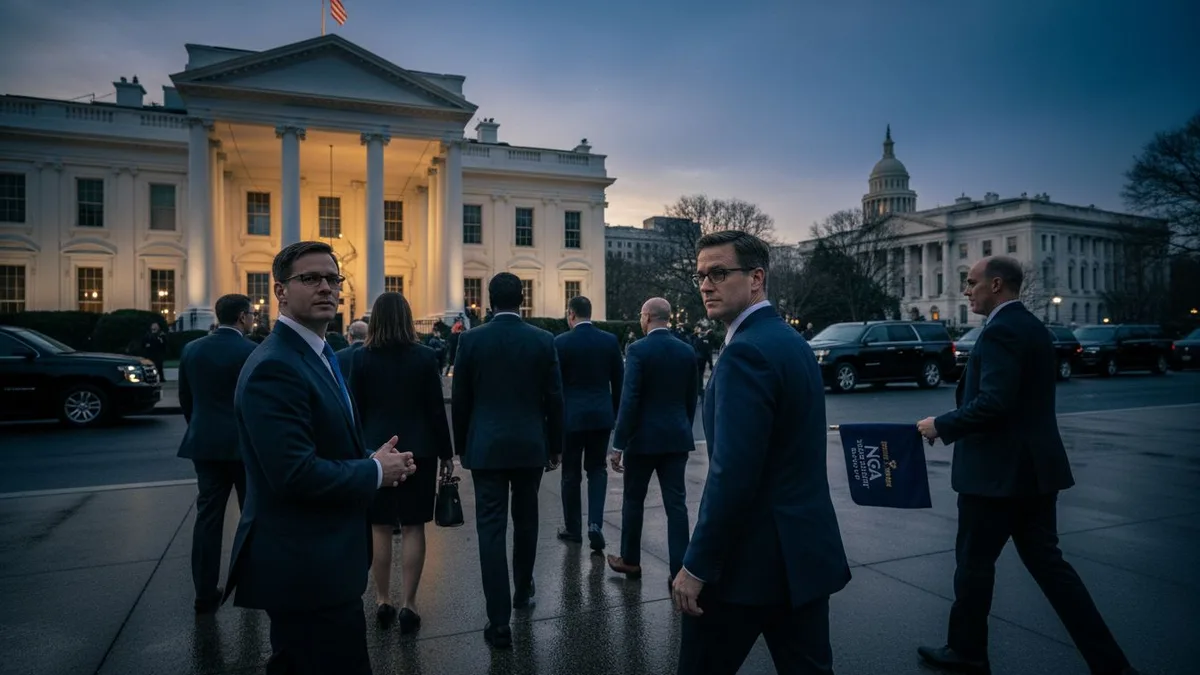
Group backs out after Trump won't invite all governors to the White House
Group backs out after Trump won't invite all governors to the White House
ContextMarcus Cole, Then and Now Expert

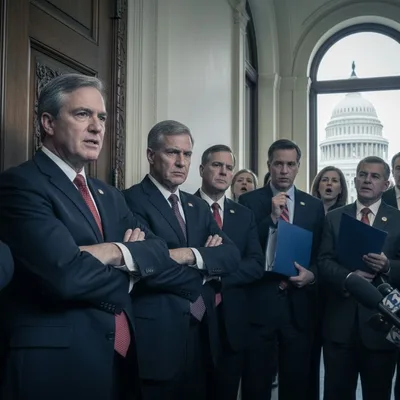
President Trump initially refused to invite Democratic Governors Polis and Moore to a White House meeting with the NGA, prompting the group to cancel. Trump relented after public outcry. The underlying tension is the escalating partisan divide and the erosion of traditional bipartisan norms in American politics. Should the President prioritize political unity and diplomatic protocol when engaging with state leaders, or is he justified in using these interactions to advance his political agenda?
🏛️ PoliticsPresidential exclusionpartisan dividediplomatic protocol
Portrait of Thomas Jefferson

Does the President believe himself above the very union he swore to uphold? The exclusion of governors, duly elected by their states, smacks of the Alien and Sedition Acts, wherein dissent was deemed sedition and political rivals were silenced. The speed alone would have undone us; you appear merely inconvenienced. This instantaneous conveyance of news, this "social media," allows for the rapid dissemination of both truth and calumny, amplifying partisan fervor. While the desire to control the narrative is as old as government itself, the President must remember that the office demands a commitment to unity, even with those who oppose him. To use invitations as a tool of political leverage is a disservice to the nation.
31 votes
Portrait of Alexander Hamilton
Alexander HamiltonAmerican Founding Era

That factionalism would persist despite our best efforts is a galling truth, yet one I confess I anticipated. The President's actions, as reported, smack of the same partisan excess that fueled the Alien and Sedition Acts. While I concede the need for a firm executive, using invitations as political cudgels echoes the suppression of dissent I witnessed then. The speed with which such discord now spreads – this instantaneous distribution of intelligence – is a marvel, though one tempered by the realization that base passions travel even faster. Is this unity, then, to be held hostage to the whims of the moment, or can we still aspire to a government that transcends petty squabbles?
28 votes

Historian's 8-Point Analysis

  • Event 1: The XYZ Affair (1797-1798). *Structural Similarity:* This incident involved President John Adams' administration dealing with French diplomats who demanded bribes before negotiations could begin. It's structurally similar because it highlights a breakdown in diplomatic protocol and strained relations between nations (or, in this case, the federal government and state governments). *Consequence:* The XYZ Affair led to a quasi-war with France and increased partisan tensions within the United States, with Federalists favoring a strong military response and Republicans (Jeffersonians) advocating for a more conciliatory approach.
  • Event 2: Alien and Sedition Acts (1798). *Structural Similarity:* Passed by the Federalist-controlled Congress and signed by President Adams, these acts restricted immigration and limited criticism of the government. This is structurally similar because it demonstrates the federal government using its power to suppress dissent and limit the rights of individuals and states, particularly those aligned with the opposing political party. *Consequence:* The Alien and Sedition Acts sparked widespread outrage, particularly among Republicans, who viewed them as an infringement on civil liberties and states' rights. The Kentucky and Virginia Resolutions, authored by Jefferson and Madison, respectively, asserted the right of states to nullify federal laws they deemed unconstitutional.
  • Event 3: The Whiskey Rebellion (1791-1794). *Structural Similarity:* This was a tax revolt in western Pennsylvania during George Washington's presidency. Farmers protested a federal tax on whiskey, leading to violent clashes. The federal government's response, sending in troops to quell the rebellion, showed the power of the federal government and its willingness to enforce its laws, even against state interests. *Consequence:* The Whiskey Rebellion demonstrated the strength of the new federal government under the Constitution. It also highlighted tensions between the federal government and states regarding taxation and the balance of power.
  • Speed and Reach of Information: In the late 18th century, news traveled slowly via newspapers, letters, and word of mouth. Today, social media and 24-hour news cycles disseminate information instantly and globally. This means that Trump's initial snub and the NGA's response would have been known almost immediately, amplifying the controversy.
  • Social Media's Impact: The existence of social media allows President Trump to directly communicate with the public, bypassing traditional media outlets. This allows him to frame the narrative and directly attack his political opponents, something that wasn't possible in Jefferson's or Hamilton's time. Governor's can also respond directly and rally support.
  • Polarization of Media: In the 1790s, newspapers were often partisan, but the level of media fragmentation and polarization is far greater today. This means that different audiences are likely to receive very different interpretations of the events, reinforcing existing political divisions.
  • The 24/7 News Cycle: The constant demand for new content means that even relatively minor events can be blown out of proportion and dominate the news cycle for days or weeks. This constant scrutiny can amplify partisan tensions and make it more difficult to find common ground.

The Then-vs-Now delta is part of a recognizable historical continuum of increasing democratization and politicization of information.

  • Step 1 (Late 18th Century): Partisan newspapers and pamphlets served as the primary means of disseminating political information, but their reach was limited.
  • Step 2 (19th Century): The rise of mass-circulation newspapers and the telegraph increased the speed and reach of news, but information was still largely controlled by media elites.
  • Step 3 (20th Century): Radio and television further democratized access to information, but these media were still largely controlled by a few powerful corporations.
  • Step 4 (21st Century): The internet and social media have created a truly decentralized information environment, where anyone can become a publisher and reach a global audience. This has led to both increased democratization and increased polarization, as individuals are able to curate their own information feeds and avoid exposure to opposing viewpoints.

In Jefferson and Hamilton's era, an equivalent event involving a President snubbing state officials would have likely been met with strong reactions, but the speed and intensity would have been different. Information would have trickled out through newspapers and word of mouth, leading to a more delayed and localized response. Public opinion would have been shaped by partisan newspapers, with Federalists likely defending the President's actions and Republicans condemning them. The range of responses would have been limited to letters to newspapers, public meetings, and possibly even protests.

Today, the reaction is instantaneous and widespread. Social media would amplify the controversy, with supporters and detractors of Trump weighing in. Cable news would provide constant coverage, further fueling the fire. The range of responses is much broader, including online petitions, boycotts, and direct engagement with politicians on social media.

  • Partisanship: The tendency to favor one's own group or party over others. In the 1790s, the rivalry between Federalists and Republicans was intense, with each side viewing the other as a threat to the republic. Patrick Henry's observation about being misquoted to serve "party views" demonstrates this.
  • Desire for Recognition/Power: The drive to seek status and influence. Hamilton's ambition and desire for a strong central government, as evidenced by his advocacy for the Constitution, reflect this. Trump's behavior in this headline can be seen as an extension of that.
  • Resentment of Perceived Slights: The tendency to feel offended or angered by perceived disrespect or mistreatment. The outrage over the Stamp Act in the 1760s, which colonists viewed as an unjust tax imposed by the British government, demonstrates this. The governors' outrage over the exclusion can be seen as a modern example.
  • The Election of 1800 (The "Revolution of 1800"): This election marked the first peaceful transfer of power from one political party to another in the United States, with Thomas Jefferson defeating incumbent President John Adams. It demonstrated that the republic could withstand partisan conflict and that the rule of law would prevail. This event established a cycle of political transitions, though not always peaceful, that continues to this day.
  • The Civil War (1861-1865): This conflict was a culmination of decades of sectional tensions over slavery and states' rights. It resulted in the abolition of slavery and the strengthening of the federal government. It also highlighted the dangers of extreme polarization and the importance of finding common ground.

The headline's likely historical importance is at the *footnote* level. While it reflects broader trends of political polarization and partisan conflict, it is unlikely to have a lasting impact on the course of history. The XYZ Affair and the Civil War, by contrast, were far more consequential events that shaped the trajectory of the nation.

Yes, this headline could be part of a larger watershed moment, specifically the ongoing erosion of democratic norms and the increasing polarization of American politics. The trend is towards greater political division and a breakdown in traditional bipartisan institutions.

Signals that would confirm this being part of a larger shift include: * Continued erosion of trust in government and media. * Increased political violence and extremism. * Further partisan gridlock and inability to address pressing national issues.

Signals that would deny this being part of a larger shift include: * A resurgence of bipartisan cooperation and compromise. * A decline in political polarization and extremism. * A renewed commitment to democratic norms and institutions.

Portrait of Thomas Jefferson
Portrait of Alexander Hamilton

Ask Thomas Jefferson or Alexander Hamilton your own question

Get daily historical perspectives on today's news

Join CastAlive free — consult history's greatest minds as your personal board of advisors