← Back to CastAlive News

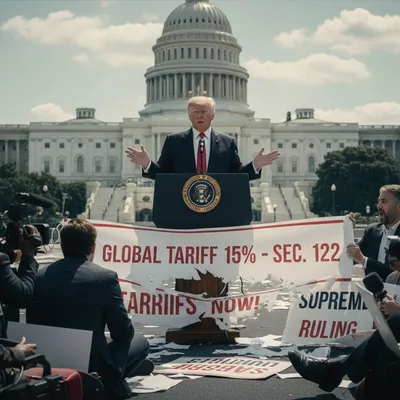
Trump's made tariffs central to his presidency. What's next?
Trump's made tariffs central to his presidency. What's next?
ContextMarcus Cole, Then and Now Expert

President Trump, after the Supreme Court struck down his tariffs imposed under the International Emergency Economic Powers Act (IEEPA), has announced a new 15% global tariff under Section 122 of the Trade Act of 1974.This move has drawn immediate criticism and creates significant trade uncertainty.The underlying tension is the balance between protecting domestic industries and the potential economic consequences of protectionist trade policies.
🏛️ PoliticsTrump tariff policySupreme Court rulingtrade uncertainty
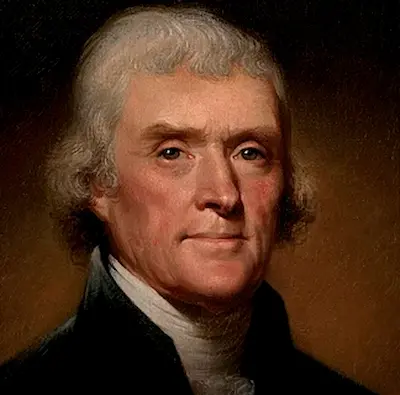
Portrait of Thomas Jefferson

Must we forever repeat the errors of the past, mistaking rashness for resolve? This new tariff, like my own Embargo Act, risks inflicting greater wounds upon ourselves than upon those it targets. The progress from my world to yours would have seemed miraculous to my contemporaries, yet the temptations to use such power for narrow, nationalistic ends remain distressingly familiar. Is economic nationalism a sustainable strategy? I fear it is not. As Adam Smith observed, such measures often punish the many to benefit the few, imposing "a real tax upon the whole country." The interconnectedness of your modern markets demands cooperation, not confrontation. To isolate oneself is to invite stagnation.
28 votes
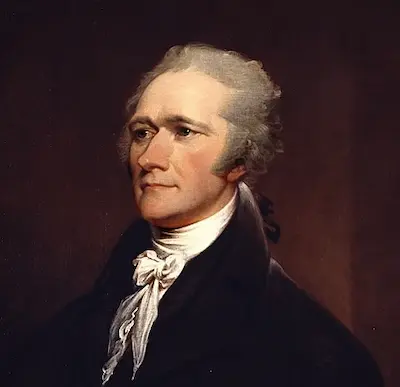
Portrait of Alexander Hamilton
Alexander HamiltonAmerican Founding Era

That a president should be so swift to embrace schemes that strangle commerce is a matter of grave concern. It calls to mind the disastrous Embargo Act under Jefferson, a policy intended to chastise foreign powers but which served only to impoverish our own citizens. These 'tariffs,' as you term them, are a blunt instrument indeed. The speed with which news and goods now traverse the globe—a marvel I can scarcely comprehend—only amplifies the disruption such measures cause. To believe economic nationalism is a sustainable path is to misunderstand the intricate web of interdependence upon which prosperity now rests. The question, then, is not merely what comes next, but whether this nation will learn from its past errors, or repeat them with ever-greater consequences.
23 votes

Historian's 8-Point Analysis

  • The Embargo Act of 1807: President Thomas Jefferson, in response to British and French interference with American shipping during the Napoleonic Wars, imposed a complete embargo on American trade with foreign nations. This is structurally similar to Trump's tariffs in that it was a unilateral action intended to pressure other nations into changing their behavior and protect American interests. The consequence of the Embargo Act was economic devastation for American merchants and farmers, leading to widespread discontent and ultimately its repeal in 1809.
  • The Corn Laws (1815-1846): In Great Britain, the Corn Laws imposed tariffs on imported grain to protect domestic producers. This is similar to Trump's tariffs in that it aimed to protect domestic industries from foreign competition. The consequence of the Corn Laws was higher food prices for British consumers, benefiting landowners but harming the working class. This led to significant political unrest and ultimately the repeal of the Corn Laws in 1846, marking a shift towards free trade.
  • The McKinley Tariff (1890): This U.S. tariff, enacted during President Benjamin Harrison's administration, raised tariffs on a wide range of imported goods to protect American industries. Like Trump's tariffs, it was a protectionist measure. The consequence was higher prices for consumers and retaliation from other countries, leading to a decline in international trade and contributing to the economic downturn of 1893.
  • Global Supply Chains: In Jefferson and Hamilton's time, international trade was primarily conducted through direct exchange of goods. Today, complex global supply chains mean that tariffs can disrupt multiple stages of production, impacting businesses and consumers in unforeseen ways. For example, a tariff on imported steel can increase the cost of manufacturing cars, appliances, and other goods that rely on steel components.
  • Instantaneous Communication: News of Trump's tariffs and the Supreme Court ruling is disseminated globally within minutes via the internet and social media. In the late 18th century, news traveled by ship and word of mouth, taking weeks or months to reach different parts of the world. This rapid dissemination allows for immediate reactions from businesses, governments, and consumers, amplifying the impact of the policy.
  • The Size and Complexity of the Economy: The U.S. economy in the 1790s was largely agrarian. Today, it is a highly diversified and industrialized economy with a much larger volume of international trade. This means that tariffs have a much broader and more complex impact, affecting a wider range of industries and consumers.
  • The Existence of International Trade Organizations: Institutions like the World Trade Organization (WTO) did not exist in the Founding Era. These organizations provide frameworks for resolving trade disputes and can influence the way countries respond to tariffs. The existence of these organizations adds another layer of complexity to the situation.

The delta between then and now is part of a recognizable historical continuum.

  • Evolution of Communication: The progression from letters and newspapers to the telegraph, telephone, radio, television, and finally the internet demonstrates a continuous trend towards faster and more widespread communication.
  • Increasing Economic Interdependence: The trend from mercantilism to free trade agreements shows a continuous movement towards greater economic interdependence between nations. The cycles of protectionism and trade liberalization are a recurring theme in economic history.
  • Growth of International Institutions: The development of international organizations like the League of Nations and the United Nations, leading to the WTO, illustrates a continuous trend towards greater international cooperation and regulation.

In Jefferson and Hamilton's era, news of tariffs or trade restrictions would have spread relatively slowly, primarily through newspapers and word of mouth. Public reaction would have been largely confined to merchants, farmers, and other directly affected groups. Today, the public has access to a constant stream of information from diverse sources, including social media, cable news, and online publications. This allows for a much faster and more widespread reaction, with opinions amplified by social media echo chambers and political polarization. The range of responses is also wider, encompassing everything from online petitions to protests to direct engagement with policymakers.

  • Self-Interest: The desire to protect one's own economic interests remains a constant. In Hamilton's time, merchants sought government protection from foreign competition. Today, businesses lobby for tariffs to safeguard their profits and market share.
  • Nationalism: The impulse to prioritize the interests of one's own nation over those of others is a recurring theme in history. In Jefferson's era, this manifested as a desire to protect American sovereignty from foreign interference. Today, it is reflected in the "America First" rhetoric that underlies Trump's tariff policies.
  • Fear of the Unknown: Uncertainty about the future can drive protectionist sentiment. In the late 18th century, Americans feared being economically dominated by European powers. Today, there are fears about the impact of globalization and automation on American jobs.
  • The Smoot-Hawley Tariff Act (1930): This U.S. tariff, enacted during the Great Depression, raised tariffs on thousands of imported goods. It is widely regarded as a major policy error that exacerbated the depression by reducing international trade and provoking retaliatory tariffs from other countries. This event redirected the course of trade policy towards greater liberalization after World War II.
  • The Bretton Woods Agreement (1944): This agreement established the International Monetary Fund (IMF) and the World Bank, laying the foundation for a more stable and cooperative international economic system. It marked a shift towards multilateralism and a recognition of the importance of international trade for global prosperity.

Today's headline, while significant, is likely a chapter section in the broader history of trade policy. It is less impactful than watershed events like the Smoot-Hawley Tariff Act or the Bretton Woods Agreement, which had long-lasting consequences for the global economy. While Trump's tariffs have generated considerable controversy and uncertainty, they are unlikely to fundamentally alter the course of international trade in the long run. The historical parallels, like the Embargo Act, suggest that such protectionist measures often lead to unintended consequences and are eventually reversed.

This headline could be part of a larger watershed moment, reflecting a broader trend towards de-globalization and a resurgence of economic nationalism. The trajectory is characterized by increasing trade tensions, protectionist measures, and a questioning of the benefits of free trade. The potential impact could be a fragmentation of the global economy, with countries forming regional trade blocs and prioritizing domestic production over international cooperation.

Signals that would confirm this being part of a larger shift include: further escalation of trade disputes, a decline in global trade volumes, a weakening of international institutions like the WTO, and a shift in public opinion towards greater support for protectionism. Signals that would deny this include: a negotiated resolution of trade disputes, a rebound in global trade, a strengthening of international institutions, and a shift in public opinion back towards support for free trade.

Portrait of Thomas Jefferson
Portrait of Alexander Hamilton

Ask Thomas Jefferson or Alexander Hamilton your own question

Get daily historical perspectives on today's news

Join CastAlive free — consult history's greatest minds as your personal board of advisors