← Back to CastAlive News

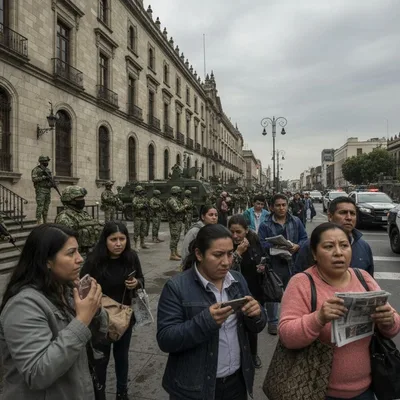
Mexico fears more violence after army kills Jalisco cartel's powerful 'El Mencho'
Mexico fears more violence after army kills Jalisco cartel's powerful 'El Mencho'
ContextMarcus Cole, Then and Now Expert

The Mexican army's killing of "El Mencho," leader of the Jalisco New Generation Cartel (CJNG), has ignited fears of increased violence.This event highlights the ongoing struggle between the Mexican government and powerful drug cartels, where eliminating a leader often triggers succession battles and retaliatory actions.The underlying tension is whether eliminating cartel leaders truly diminishes their power or simply fuels further instability.Given the history of cartel fragmentation, does this action ultimately improve public safety.
🏛️ Politicscartel violencemilitary operationspublic safety
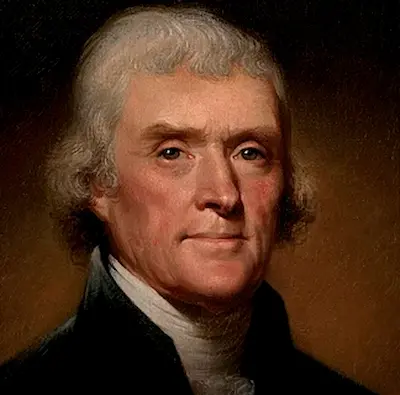
Portrait of Thomas Jefferson

Whether the fall of one tyrant truly diminishes the broader scourge, that is the question before us. News of this "El Mencho's" demise, sped by what I might call an instantaneous printing press that circles the globe, echoes the fate of Caesar. Did his assassination bring forth an era of peace, or did it usher in further strife, as Machiavelli observed? I confess I do not know the full scope of these "cartels," but if, as I suspect, this death merely invites further contention for power, then it is a fool's errand, a costly distraction from the root causes that allow such organizations to flourish. The desire for security, however understandable, must not blind us to the lessons of history.
24 votes
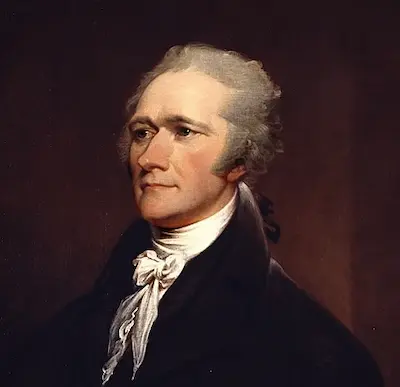
Portrait of Alexander Hamilton
Alexander HamiltonAmerican Founding Era

A dead lion does not guarantee a tamed jungle. This news from Mexico reminds me of nothing so much as the aftermath of Caesar's assassination – a momentary triumph followed by chaos and renewed struggle for power. Whether eliminating this "El Mencho" improves public safety is a question akin to asking if removing one head from the Hydra truly defeats the beast. These cartels, woven into the very fabric of the nation, are far more resilient than any single man. Their weapons far exceed what the armies of Europe possessed. Removing this leader may simply create a vacuum, inviting even more ruthless actors to fill the void and perpetuate the cycle of violence. The lust for power will always find a vessel.
24 votes

Historian's 8-Point Analysis

  • The Fall of the Aztec Empire (1519-1521): The Spanish conquest of the Aztec Empire, led by Hernán Cortés, shares structural similarities. The death of a powerful leader (Montezuma, though not directly killed by the Spanish, his authority was undermined leading to his death) created a power vacuum, leading to internal strife and ultimately the collapse of the empire. Similarly, the death of "El Mencho" could trigger a power struggle within the CJNG, destabilizing the cartel and potentially leading to increased violence as factions vie for control.
  • The St. Bartholomew's Day Massacre (1572): This event, in which French Catholics massacred Huguenots (French Protestants), demonstrates how the elimination of key figures can incite further violence. The assassination of Huguenot leaders sparked widespread bloodshed and intensified the French Wars of Religion. The death of "El Mencho" could similarly incite retaliatory attacks from the CJNG or rival cartels, leading to a surge in violence.
  • The Assassination of Julius Caesar (44 BC): Caesar's assassination created a power vacuum in Rome, leading to a period of civil war and ultimately the rise of the Second Triumvirate. While the context is vastly different, the underlying principle of a powerful leader's death leading to instability and conflict is relevant.
  • Information Dissemination: In Jefferson and Hamilton's time, news of an event like the death of a cartel leader would take weeks or months to reach the public, traveling by ship or horseback. Today, news spreads globally in seconds via the internet and social media. This instant dissemination can amplify fear and incite immediate reactions, both positive and negative.
  • Military Technology: The technological gap between the late 18th century and today is vast. The Mexican army today possesses advanced weaponry, surveillance technology, and communication systems that were unimaginable in Jefferson and Hamilton's era. This allows for more precise targeting of individuals like "El Mencho" but also potentially escalates the level of violence and collateral damage.
  • Global Interconnectedness: The world is far more interconnected today than it was in the 18th century. The drug trade, in particular, is a global phenomenon with complex networks spanning continents. The death of a cartel leader in Mexico can have ripple effects on drug markets and security situations in the United States and other countries. This level of interconnectedness was not present in Jefferson and Hamilton's time.
  • Sophistication of Criminal Organizations: Cartels today are far more sophisticated and powerful than any criminal organizations Jefferson or Hamilton would have encountered. They wield immense financial resources, possess advanced weaponry, and have infiltrated various levels of government. This makes them more resilient to the loss of a leader and potentially more dangerous in the aftermath.

The changes identified above are part of a recognizable historical continuum.

  • Printing Press (1440): This invention marked an early step in the democratization of information, allowing for the wider dissemination of news and ideas than previously possible.
  • Telegraph (1844): The telegraph revolutionized communication by allowing for near-instantaneous transmission of messages over long distances.
  • Radio Broadcasting (Early 20th Century): Radio further accelerated the spread of information and allowed for mass communication on an unprecedented scale.

These developments demonstrate a continuous trend toward faster and wider dissemination of information, culminating in the internet and social media of today.

In Jefferson and Hamilton's era, the average person would likely have learned about the death of a figure like "El Mencho" (had such a figure existed then) weeks or months after the event. Information would be filtered through official channels or word-of-mouth, making it difficult to verify its accuracy. Reactions would likely be localized and driven by personal connections to the events. Today, the public would learn about the death almost instantly and be bombarded with information from various sources, including news outlets, social media, and government statements. Reactions would be more immediate, widespread, and potentially polarized, fueled by online echo chambers and partisan narratives.

  • Fear of Instability: The fear of social and political instability is a constant throughout history. In the wake of the American Revolution, many colonists feared the potential for anarchy and factionalism. This fear remains a powerful motivator today, as people worry about the consequences of cartel violence on their safety and well-being.
  • Desire for Security: The desire for security and protection from harm is a fundamental human need. In Jefferson and Hamilton's time, this manifested in the desire for a strong central government capable of defending the nation from foreign threats and maintaining domestic order. Today, this desire is reflected in public support for law enforcement and military action against cartels.
  • Greed and Pursuit of Power: The pursuit of wealth and power is a recurring theme in human history. In the 18th century, this was evident in the competition among European powers for colonial possessions and control of trade routes. Today, this drive is manifested in the insatiable greed of drug cartels and their willingness to use violence to maintain their dominance.
  • The Prohibition Era in the United States (1920-1933): This period marked a significant shift in the relationship between government and the control of substances. It inadvertently fueled the rise of organized crime, demonstrating the difficulty of suppressing demand through prohibition and the unintended consequences of such policies.
  • The War on Drugs (1970s-Present): Declared by President Nixon, this policy shift dramatically increased funding and resources dedicated to combating drug trafficking. While intended to reduce drug use and crime, it has been criticized for its disproportionate impact on minority communities and its failure to stem the flow of drugs. This has led to cyclical debates about decriminalization and alternative approaches.

The death of "El Mencho" is likely a chapter section event in the broader history of the Mexican drug war. While significant in terms of potentially disrupting the CJNG's operations, it is unlikely to fundamentally alter the dynamics of the drug trade or the relationship between Mexico and the United States. The historical parallels, such as the fall of the Aztec Empire, involved the collapse of entire civilizations, while the watershed events, like the War on Drugs, represented major policy shifts. The death of a single cartel leader, while important, does not reach that level of historical significance.

This headline could be part of a larger watershed moment if it signals a fundamental shift in the Mexican government's strategy towards cartels or leads to a significant decline in the power and influence of organized crime. However, this is unlikely. The trend has been a cycle of cartel leaders being killed or captured, followed by periods of increased violence and fragmentation.

Signals that would confirm this being part of a larger shift would include:

  • A sustained decrease in drug-related violence across Mexico.
  • A significant reduction in the flow of drugs across the border into the United States.
  • A successful implementation of alternative economic development programs in areas affected by cartel violence.
  • A decrease in corruption within the Mexican government and security forces.

Without these signals, the death of "El Mencho" is likely to be an isolated event that does not fundamentally alter the trajectory of the drug war.

Portrait of Thomas Jefferson
Portrait of Alexander Hamilton

Ask Thomas Jefferson or Alexander Hamilton your own question

Get daily historical perspectives on today's news

Join CastAlive free — consult history's greatest minds as your personal board of advisors