← Back to CastAlive News

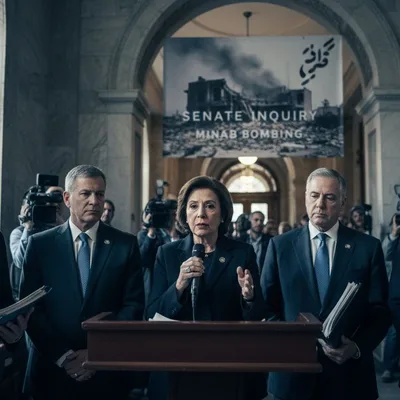
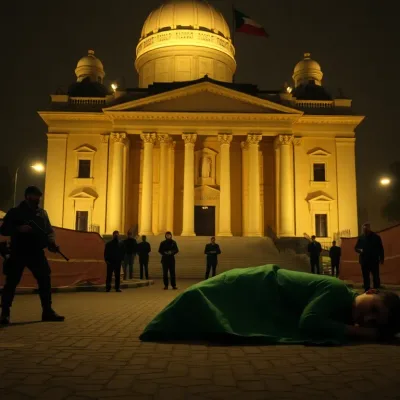
Israeli soldiers shot a Palestinian boy and stood around as he bled to death, video shows
BBC News|Feb 27
Israeli soldiers shot a Palestinian boy and stood around as he bled to death, video shows
ContextMarcus Cole, Then and Now Expert

Today's "Hot Takes" examines the shooting of 14-year-old Jad Jadallah by Israeli soldiers in the West Bank.A BBC investigation alleges soldiers stood by as he bled, potentially planting evidence to justify the shooting.This incident highlights the ongoing conflict and differing narratives surrounding IDF actions in occupied territories.The tension lies in accountability, use of force, and the protection of civilians.
🏛️ Politicsmilitary conductuse of forcePalestinian casualties
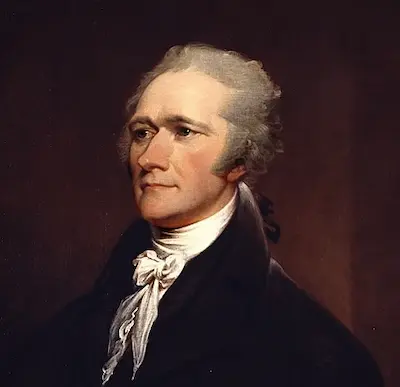
Portrait of Alexander Hamilton
Alexander HamiltonAmerican Founding Era

That the passions of men so easily eclipse the virtues of nations is a lamentable truth, proven anew by this report. The Boston Massacre, born of escalating tensions and the perceived arrogance of soldiery, echoes in this tragedy. Though your instruments transmit images across oceans in an instant, the raw grief and fury remain unchanged. The question is not whether security justifies all actions, but whether *this* action secured anything at all, or merely inflamed a festering wound. Even a legitimate army, absent discipline, is a mob with flags. Accountability, swiftly rendered, is the only balm for such a grievous injury.
20 votes
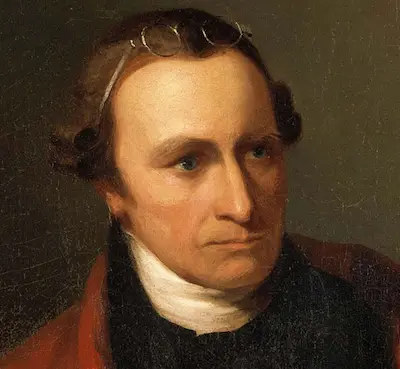
Portrait of Patrick Henry
Patrick Henry1736-1799

Has the world learned nothing from the tragedy of King Henry? The argument you are having now is one my age never resolved, merely postponed. Did not the Boston Massacre begin with rocks and snowballs? The question of security versus rights is a false one, meant to justify what cannot be justified. A soldier's duty is to protect the innocent, not stand idly by as life ebbs away. This "video" you speak of is but a modern means of conveying the same truth that handwritten pamphlets once did – that power, unchecked, breeds contempt and cruelty. The shedding of innocent blood cries out to Heaven for justice, be it in Boston or the West Bank.
22 votes

Historian's 8-Point Analysis

  • The Boston Massacre (March 5, 1770): British soldiers fired on a crowd of civilians, killing five. The event was widely publicized and used to galvanize anti-British sentiment. Structurally, both events involve soldiers of a dominant power using lethal force against civilians in a context of political tension and occupation. The consequence of the Boston Massacre was increased colonial resentment and a push toward independence.
  • The Amritsar Massacre (April 13, 1919): British Indian Army soldiers fired on a large crowd of unarmed Indians in Amritsar, killing hundreds. Similar to the current headline, there were accusations of excessive force and a failure to provide adequate medical assistance to the wounded. The consequence was a surge in Indian nationalism and a weakening of British rule.
  • Peterloo Massacre (August 16, 1819): British cavalry charged into a crowd of protesters demanding parliamentary reform in Manchester, England, killing 15 and injuring hundreds. The structural similarity lies in the use of state violence against civilians perceived as a threat to the established order. The consequence was increased public awareness of social inequalities and a push for political reform.
  • Speed and Reach of Information: In the 18th century, news of such an event would take weeks or months to spread, primarily through printed pamphlets and word of mouth. Today, video evidence can be disseminated globally within minutes via the internet and social media, creating immediate and widespread outrage.
  • Visual Documentation: The existence of CCTV footage and smartphone videos provides irrefutable evidence (or at least, highly persuasive evidence) that was unavailable in the 18th century. The impact of seeing the event unfold visually is far greater than relying on written accounts, which were often disputed or propagandized.
  • International Scrutiny and Legal Mechanisms: International organizations like the UN and human rights groups have far greater influence and mechanisms for investigation and potential prosecution than existed in the 18th century. This creates a higher level of accountability for states and individuals accused of human rights violations.
  • Public Diplomacy: Governments today are far more concerned with public opinion, both domestically and internationally. In the 18th century, governments were less concerned with shaping public perception through public relations and propaganda.

The Then-vs-Now delta is part of a recognizable historical continuum.

  • Development of the Printing Press: The printing press allowed for the mass production of pamphlets and newspapers, enabling the rapid dissemination of information and the formation of public opinion.
  • Telegraph and Photography: The telegraph allowed for near-instantaneous communication across long distances, and photography provided visual documentation of events.
  • Radio and Television: These technologies further accelerated the speed and reach of information, bringing events into people's homes in real-time.

In the 18th century, news of a similar event would have spread slowly, likely filtered through biased accounts. Public reaction would have been localized and primarily confined to those directly affected or politically engaged. Pamphlets and broadsides would have been the primary means of disseminating information, and public discourse would have been limited to taverns, coffeehouses, and town meetings.

Today, the reaction would be immediate and global. Social media would amplify outrage, leading to protests, boycotts, and calls for international intervention. Governments would be forced to respond quickly to public pressure, and international organizations would likely launch investigations.

  • Empathy/Moral Outrage: The innate human capacity for empathy and moral outrage is triggered by witnessing violence against vulnerable individuals, regardless of the era. For example, the Boston Massacre provoked widespread anger and resentment among colonists, fueling the movement for independence.
  • In-Group/Out-Group Bias: The tendency to favor one's own group and demonize outsiders remains a powerful force. In the 18th century, this manifested in religious and nationalistic conflicts. Today, it is evident in the Israeli-Palestinian conflict, where both sides view the other with suspicion and hostility.
  • Desire for Justice/Revenge: The human desire for justice and revenge is a constant across time. In the American Revolution, colonists sought justice for perceived injustices committed by the British crown. Today, Palestinians seek justice for the loss of land and lives, while Israelis seek security from attacks.
  • The Balfour Declaration (1917): This declaration, in which the British government expressed support for the establishment of a Jewish homeland in Palestine, is a major inflection point in the Israeli-Palestinian conflict. It laid the groundwork for increased Jewish immigration to Palestine and the eventual creation of the State of Israel, leading to ongoing conflict with the Palestinian population.
  • The Six-Day War (1967): This war resulted in Israel's occupation of the West Bank, Gaza Strip, and other territories. This occupation has been a major source of tension and conflict between Israelis and Palestinians ever since.

The headline is likely a chapter section in the ongoing history of the Israeli-Palestinian conflict. While the event is tragic and may generate short-term outrage, it is unlikely to fundamentally alter the trajectory of the conflict. The historical parallels, such as the Boston Massacre, had significant consequences, but this event is unlikely to have the same impact due to the entrenched nature of the Israeli-Palestinian conflict and the lack of a clear path toward resolution.

This headline could be part of a larger watershed moment if it contributes to a significant shift in international public opinion, leading to increased pressure on Israel to change its policies in the West Bank. The trend of increased settler violence and military actions against Palestinians, combined with the growing availability of video evidence, could erode international support for Israel.

Signals that would confirm this being part of a larger shift include:

  • A significant increase in international sanctions or boycotts against Israel.
  • A shift in US policy toward Israel, such as a reduction in military aid.
  • A successful prosecution of Israeli soldiers for human rights violations in international courts.
  • A major breakthrough in peace negotiations between Israelis and Palestinians.
Portrait of Alexander Hamilton
Portrait of Patrick Henry

Ask Alexander Hamilton or Patrick Henry your own question

Get daily historical perspectives on today's news

Join CastAlive free — consult history's greatest minds as your personal board of advisors