← Back to CastAlive News

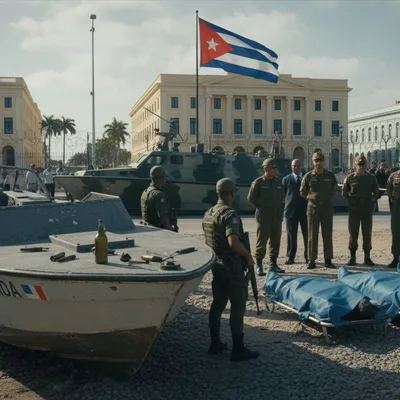
Cuba says it killed 4 people aboard Florida-registered speedboat that opened fire
Cuba says it killed 4 people aboard Florida-registered speedboat that opened fire
ContextMarcus Cole, Then and Now Expert

Cuba claims its border patrol killed four people aboard a Florida-registered speedboat that opened fire in Cuban waters. The boat, reportedly stolen, allegedly carried assault rifles and Molotov cocktails, leading Cuba to allege a "terrorist infiltration" attempt. With one American dead, Florida's Attorney General vows accountability. This incident escalates already strained US-Cuba relations. Given the history of conflict and mistrust, how should the U.S. respond to this deadly clash?
🏛️ PoliticsCuba-US tensionsmaritime incidentmilitary engagement
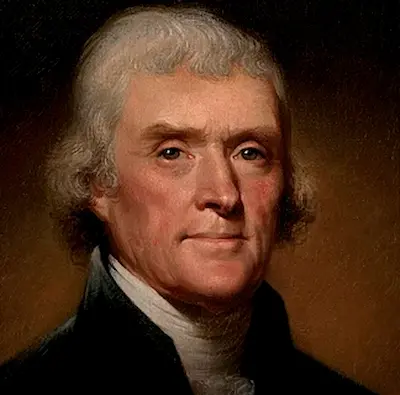
Portrait of Thomas Jefferson

Must blood always answer blood? The cries for retribution from Florida, I suspect, echo the sentiments of many, yet reason demands a measured response, lest we stumble into a needless conflict. This incident, with its echoes of the *Little Belt* affair in 1811, reminds us how easily tensions can escalate from a single, disputed encounter. The speed with which word of this event has spread — a feat unimaginable in my time, yet akin to a pamphlet war conducted at the speed of light — only serves to inflame passions further. We must demand a thorough investigation, conducted with impartiality, and guided by the principles of justice. But to rush to arms before all facts are known would be a grave error, one that could plunge us into a war we may both regret.
13 votes
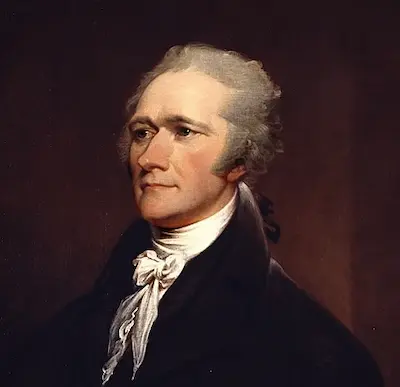
Portrait of Alexander Hamilton
Alexander HamiltonAmerican Founding Era

That blood has been spilled on the waters between Cuba and Florida is a tragedy, but also, alas, predictable. Just as in the affair of the *Little Belt* in 1811, when guns spoke before diplomats could whisper, we find ourselves again amidst disputed facts and escalating tensions. We must, above all, ascertain the truth of this incident. If Cuba acted in defense against genuine aggression, a measured response is warranted. However, if this was an act of unwarranted violence, we must respond with firmness. I confess I do not know what to make of these "speedboats" and "assault rifles," yet the principles of national sovereignty and self-defense remain unchanged. The Attorney General of Florida speaks of accountability; let us ensure it is grounded in justice and not mere retribution.
20 votes

Historian's 8-Point Analysis

  • **The *Little Belt* Affair (1811):** This incident involved a British warship, HMS *Little Belt*, and the American frigate USS *President*. The *President*, under Commodore John Rodgers, engaged the *Little Belt* after a perceived provocation. While the details of who fired first were disputed, the *Little Belt* was severely damaged, and several British sailors were killed or wounded. The structural similarity lies in the maritime engagement between vessels of two nations with strained relations, where the initial aggressor is disputed, and loss of life occurs. The consequence was a significant increase in tensions between the United States and Great Britain, contributing to the War of 1812.
  • **The *Chesapeake-Leopard* Affair (1807):** The British warship HMS *Leopard* attacked the American frigate USS *Chesapeake* off the coast of Virginia after the *Chesapeake*'s captain refused to allow the British to search for deserters. Several American sailors were killed or wounded. This is structurally similar because it involves a maritime incident, a perceived violation of sovereignty (in this case, the right to refuse search), and loss of life, leading to heightened tensions. The consequence was a public outcry in the United States and a near-war situation with Great Britain.
  • The XYZ Affair (1797-1798): While not a maritime incident, the XYZ Affair shares structural similarities in terms of escalating tensions and alleged provocations. American diplomats sent to France to negotiate were approached by French agents who demanded bribes and a loan as preconditions for negotiations. This perceived insult to American sovereignty and dignity led to a quasi-war with France. The similarity lies in the perception of a hostile act (in this case, the demand for bribes) leading to a strong reaction. The consequence was the Quasi-War, an undeclared naval war between the United States and France.
  • Information Dissemination Speed: In Jefferson and Hamilton's time, news of the incident would have taken weeks, if not months, to reach the public, primarily through newspapers and word of mouth. Today, the news spreads globally within minutes via the internet and social media. This speed amplifies public reaction and puts immediate pressure on political leaders to respond.
  • Technological Warfare: The weaponry involved is drastically different. In the late 18th and early 19th centuries, naval engagements involved cannons and muskets. Today, the headline involves assault rifles, speedboats, and the potential for more advanced military technology. This escalation in firepower makes the potential for casualties and escalation far greater.
  • International Law and Organizations: While international law existed in the late 18th century, institutions like the United Nations and the Organization of American States (OAS) did not. These organizations provide a framework for diplomatic resolution and investigation that was absent in Jefferson and Hamilton's time. Kennedy references the Rio Pact and the OAS in his Cuban Missile Crisis Address, demonstrating the importance of these organizations in the modern era.
  • Media Landscape: The media landscape has changed dramatically. In Jefferson and Hamilton's time, newspapers were often partisan and served as mouthpieces for political factions. Today, while partisanship still exists, the presence of 24-hour news channels, online media, and social media creates a more fragmented and immediate, though not necessarily more accurate, information environment.

The Then-vs-Now delta is part of a recognizable historical continuum.

  • Expansion of Media: From partisan newspapers in the 18th century to the penny press in the 19th century, radio in the early 20th century, television in the mid-20th century, and the internet in the late 20th and early 21st centuries, the speed and reach of information dissemination have steadily increased.
  • Evolution of Warfare: From muskets and cannons to repeating rifles, machine guns, and eventually missiles and drones, the lethality and range of weapons have consistently increased, leading to greater potential for destruction.
  • Development of International Law: From rudimentary treaties between nations to the development of international law principles and the creation of international organizations like the League of Nations and the United Nations, the framework for international relations has evolved over time.

In Jefferson and Hamilton's era, the average person would have learned about the incident weeks or months later through newspapers or word of mouth. The information would likely be filtered through partisan lenses, shaping their understanding. Public reaction would be slower and more localized, potentially leading to public meetings, resolutions, and calls for action directed at the government.

Today, the public would learn about the incident almost instantaneously through various online and broadcast media. Reactions would be immediate and widespread, expressed through social media, online forums, and potentially protests. The speed and intensity of public reaction would put immediate pressure on political leaders to respond decisively. The range of responses would be broader, from calls for military action to demands for diplomatic resolution.

  • Nationalism: The impulse to defend one's nation's sovereignty and honor remains a powerful force. In Jefferson's time, the XYZ Affair ignited strong nationalist sentiments, leading to calls for war with France. This impulse is still present today, as seen in the Cuban government's justification for its actions as defending its sovereignty against a "terrorist infiltration."
  • Fear of Foreign Intrusion: The fear of foreign interference or aggression is a constant throughout history. During Hamilton's time, fears of European powers meddling in American affairs were widespread. This fear is reflected in the Cuban government's claim that the speedboat occupants intended to carry out a "terrorist infiltration."
  • Desire for Revenge: The desire for retribution after a perceived wrong or attack is a fundamental human impulse. After the *Chesapeake-Leopard* Affair, there were widespread calls for revenge against Great Britain. This impulse is likely present today, as seen in Florida Attorney General James Uthmeier's statement that the Cuban government "cannot be trusted" and that he will "do everything in our power to hold these communists accountable."
  • The Spanish-American War (1898): This war marked a turning point in U.S.-Cuba relations, leading to the U.S. occupation of Cuba and the establishment of a U.S. naval base at Guantanamo Bay. This event solidified U.S. influence over Cuba and set the stage for future tensions. The cycle involves periods of U.S. dominance followed by Cuban resistance and attempts to assert independence.
  • The Cuban Revolution (1959): This event fundamentally altered the relationship between the U.S. and Cuba, leading to the establishment of a communist government and the subsequent U.S. embargo. This event created a deep ideological divide and set the stage for decades of hostility. The cycle involves periods of heightened tension followed by attempts at normalization, only to be disrupted by new crises.

The headline's likely historical importance is a *chapter section*. While the incident is significant and could escalate tensions, it is unlikely to fundamentally alter the long-term trajectory of U.S.-Cuba relations in the same way as the Spanish-American War or the Cuban Revolution. It is more likely to be a temporary disruption in an already strained relationship, similar to the 1996 Brothers to the Rescue incident. The parallels from #1, while relevant, did not fundamentally alter the course of history in the same way as the watershed events from #6.

This headline could be part of a larger watershed moment if it signals a return to more aggressive tactics by either side, potentially leading to a further deterioration of relations and a renewed cycle of hostility.

  • Potential Trend: A trend of increased paramilitary activity or covert operations between the U.S. and Cuba, fueled by heightened tensions and a lack of diplomatic engagement.
  • Potential Impact: A further deterioration of relations, increased risk of military confrontation, and a setback for any potential normalization efforts.
  • Confirming Signals: Increased reports of covert operations, escalating rhetoric from both governments, and a breakdown in diplomatic channels.
  • Denying Signals: A swift and transparent investigation by both governments, a willingness to engage in diplomatic dialogue, and a de-escalation of rhetoric.

If this incident is isolated, it will be followed by diplomatic efforts to de-escalate tensions and prevent similar incidents from occurring in the future. However, given the current political climate and the history of U.S.-Cuba relations, the potential for escalation is significant.

Portrait of Thomas Jefferson
Portrait of Alexander Hamilton

Ask Thomas Jefferson or Alexander Hamilton your own question

Get daily historical perspectives on today's news

Join CastAlive free — consult history's greatest minds as your personal board of advisors