← Back to CastAlive News

Read President Trump’s statement on Iran in full
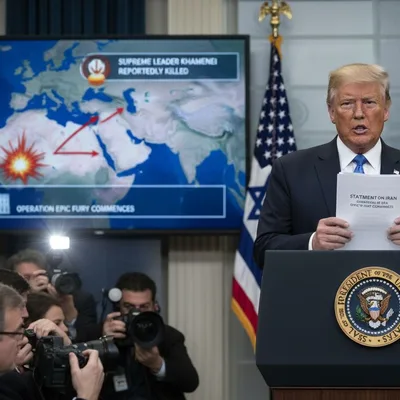
Read President Trump’s statement on Iran in full
ContextMarcus Cole, Then and Now Expert

President Trump's statement confirms a major US-Israeli offensive, "Operation Epic Fury," against Iran, including strikes that reportedly killed Supreme Leader Khamenei.This follows years of escalating tensions since the US withdrew from the Iran nuclear deal.Iran has retaliated, targeting US facilities.The stakes are regional stability, global oil supplies, and the potential for a wider conflict.
🏛️ Politicsmilitary escalationIran conflictU.S. foreign policy
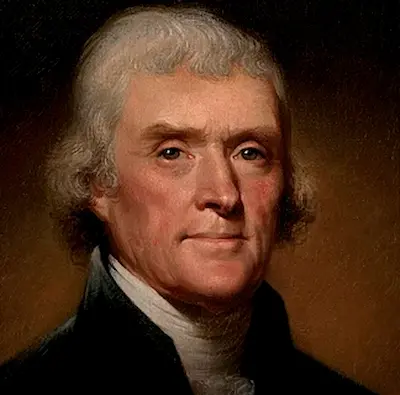
Portrait of Thomas Jefferson

Has the siren song of military glory once again deafened the voices of reason? This "Operation Epic Fury," as it is termed, bears a chilling resemblance to the naval skirmishes with France during the Quasi-War. Then, as now, perceived insults to our nation’s honor led to a dangerous escalation. This instantaneous communication – what you call the global internet – amplifies the passions of both sides, making reasoned discourse all the more difficult. The question, as always, is whether the pursuit of national interests through such forceful means will truly secure liberty and prosperity. I fear that it will only breed further conflict and instability, a cycle from which we may not easily escape.
9 votes
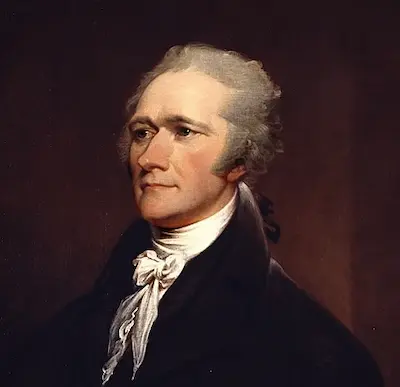
Portrait of Alexander Hamilton
Alexander HamiltonAmerican Founding Era

Has the ink on the treaty barely dried before the cannons roar anew? This "Operation Epic Fury" against Persia smacks of the same zealotry that drove the French to madness and near ruin. The Quasi-War taught us that even undeclared conflict bleeds a nation dry. You have given every citizen a printing press in their pocket; consider what my era did with just a few. Now, the news of this assault spreads with the speed of a merchantman before a gale, stirring passions and inflaming the situation beyond reason. Such instant communication may win quick support, but will it secure lasting peace? Or will it merely embroil us in a protracted struggle, sapping our strength and undermining the very foundations of the Republic? The pursuit of interests must be balanced against the price of intervention.
10 votes

Historian's 8-Point Analysis

  • The Quasi-War with France (1798-1800): This undeclared naval war between the United States and France shares structural similarities with the current situation. Like the current conflict with Iran, the Quasi-War stemmed from perceived insults and threats to American sovereignty and interests (French privateers attacking American shipping). The consequence was a build-up of the American Navy, a strengthening of the federal government's power, and a deep political divide between Federalists (who favored war) and Republicans (who opposed it).
  • The Barbary Wars (1801-1805, 1815): The Barbary Wars, particularly the First Barbary War under President Jefferson, involved military action against North African states (Tripoli, Algiers, Tunis) who were engaging in piracy against American merchant ships. The structural similarity lies in the use of military force to protect American commercial interests and assert American power in a region far from its shores. The consequence was the establishment of a stronger U.S. Navy and a demonstration of American resolve to defend its interests abroad.
  • The XYZ Affair (1797-1798): While not a direct military conflict, the XYZ Affair is relevant because it involved a diplomatic crisis with France that led to a surge in anti-French sentiment and preparations for war. The structural similarity is the perception of foreign insult and aggression leading to a heightened sense of national unity and a willingness to use force. The consequence was the Quasi-War.
  • Speed and Reach of Information: In the late 18th/early 19th centuries, news traveled slowly via ships, letters, and newspapers with limited circulation. Today, news of President Trump's statement and the military actions would be instantly available globally through the internet and 24-hour news channels. This immediate dissemination drastically alters the speed and intensity of public reaction and international response.
  • Military Technology: The military capabilities of the U.S. have advanced exponentially since Jefferson and Hamilton's time. The ability to conduct precision strikes on targets like Iranian nuclear facilities and leadership figures from afar with minimal risk to American forces (at least initially) is a game-changer. The scale of destruction possible today is also far greater, raising the stakes of conflict.
  • Nuclear Weapons: The existence of nuclear weapons fundamentally alters the calculus of international conflict. While Iran may not currently possess nuclear weapons, the potential for escalation to nuclear war is a constant threat that did not exist in the Founding Era. This creates a level of risk and uncertainty that would have been unimaginable to Jefferson and Hamilton.
  • Global Interdependence: The world is far more interconnected economically and diplomatically than it was in the late 18th century. A conflict with Iran has the potential to disrupt global oil supplies, impact international trade, and destabilize the entire Middle East region in ways that would have been less significant in the earlier era.

The Then-vs-Now delta is part of a recognizable historical continuum, particularly regarding technological advancements in warfare and communication.

  • Telegraph (Mid-19th Century): Allowed for near-instantaneous communication across continents, revolutionizing news dissemination and military command.
  • Radio (Early 20th Century): Enabled mass communication and propaganda, shaping public opinion on a scale previously unimaginable.
  • The Internet (Late 20th Century): Created a global network for information sharing and social interaction, further accelerating the spread of news and opinions.

These intermediate steps demonstrate a clear progression towards faster, more widespread communication and increasingly destructive military technologies.

In Jefferson and Hamilton's era, news of a similar event (e.g., a military clash with France or a Barbary state) would have taken weeks or months to reach the average citizen. Information would be filtered through newspapers with partisan agendas. Public reaction would be localized and shaped by local economic interests and political affiliations. Today, the public would be bombarded with information from multiple sources, leading to a more immediate and potentially volatile reaction. Social media would amplify extreme views and contribute to polarization.

  • Fear of Foreign Threats: The instinct to protect oneself and one's nation from external threats remains a constant. In the late 18th century, the fear of European powers like France and Great Britain fueled support for a strong national defense. Today, the fear of terrorism and rogue states plays a similar role.
  • Desire for National Pride and Honor: The desire to uphold national pride and defend national honor is a powerful motivator. In Hamilton's time, this was evident in the Federalist push for a strong navy to assert American sovereignty on the high seas. Today, similar sentiments are often invoked to justify military interventions abroad.
  • Susceptibility to Propaganda: The tendency to be swayed by propaganda and emotional appeals remains a constant. In Jefferson's era, partisan newspapers played a key role in shaping public opinion. Today, social media and online disinformation campaigns serve a similar purpose.
  • The Treaty of Westphalia (1648): This treaty established the modern system of nation-states and the principle of state sovereignty, which has been a cornerstone of international relations ever since. The current conflict with Iran challenges this principle, as the U.S. is intervening in the internal affairs of another sovereign state.
  • The End of the Cold War (1991): The collapse of the Soviet Union ushered in a period of American unipolarity, leading to increased U.S. interventionism in various regions of the world. The current conflict with Iran can be seen as a continuation of this trend.

The headline "Read President Trump's statement on Iran in full" is likely to be a chapter-defining event. While not on the scale of a world war, the military escalation with Iran has the potential to reshape U.S. foreign policy in the Middle East, impact global energy markets, and further destabilize the region. It is more significant than the Quasi-War or the Barbary Wars, as it involves a more powerful and strategically important nation.

Yes, this headline could be part of a larger watershed moment. The trend is a gradual erosion of the international norms of state sovereignty and non-intervention, coupled with an increasing willingness of the U.S. to use military force to achieve its foreign policy objectives. The potential impact is a more unstable and conflict-ridden world order. Signals that would confirm this being part of a larger shift include: further military escalations in the Middle East, a breakdown of international arms control agreements, and a rise in nationalist and protectionist sentiments around the world.

Portrait of Thomas Jefferson
Portrait of Alexander Hamilton

Ask Thomas Jefferson or Alexander Hamilton your own question

Get daily historical perspectives on today's news

Join CastAlive free — consult history's greatest minds as your personal board of advisors