← Back to CastAlive News

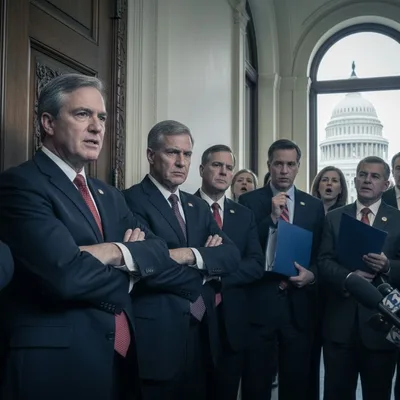
Mourners take to streets of Tehran following confirmation of Khamenei's death
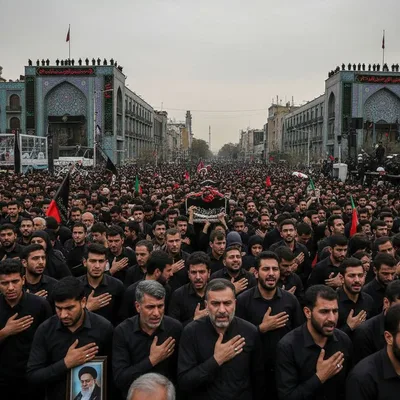
Mourners take to streets of Tehran following confirmation of Khamenei's death
ContextMarcus Cole, Then and Now Expert

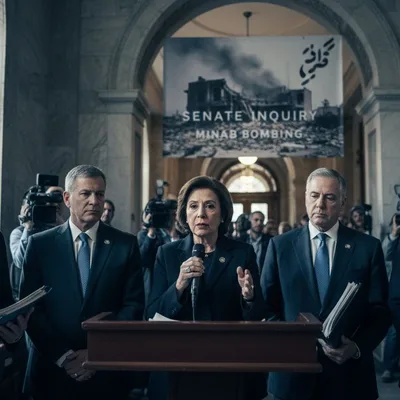
The death of Iran's Supreme Leader Khamenei, following reported U.S. and Israeli strikes, has triggered both mourning and celebration in Tehran. An interim council is in place as the Assembly of Experts begins the process of selecting a successor. This occurs amid ongoing regional conflict and internal power struggles. The stakes are high: Will Khamenei's death lead to greater instability, or an opportunity for reform? How should the United States respond to this pivotal moment?
🏛️ PoliticsInternational conflictregional instabilityleadership succession
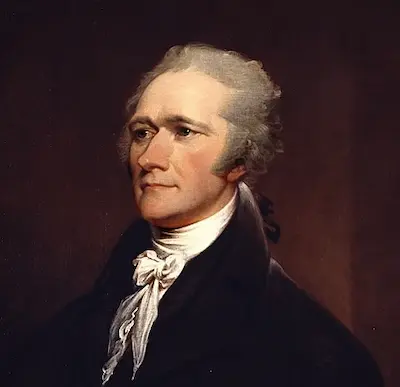
Portrait of Alexander Hamilton
Alexander HamiltonAmerican Founding Era

A nation's grief is often the midwife of its ambition. The progress from my world to yours would have seemed miraculous to my contemporaries, yet the ambitions of men remain stubbornly familiar. This so-called Supreme Leader's death, and the mourning which attends it, recalls the passing of Louis XIV – a void filled with uncertainty and the potential for chaos. Whether this leads to reform or ruin depends on the strength of those who would guide Iran. The United States must proceed with caution, offering a steady hand but not meddling in their internal affairs. As I wrote in *Federalist 6*, "To look for a continuation of harmony between a number of independent, unconnected sovereignties... would be to disregard the uniform course of human events, and to set at defiance the accumulated experience of ages.
9 votes
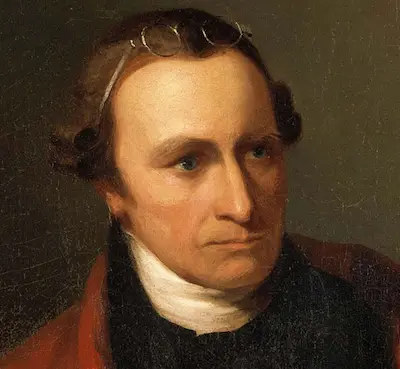
Portrait of Patrick Henry
Patrick Henry1736-1799

Has the scent of revolution truly faded from men's nostrils? The death of a tyrant, be he king or ayatollah, is ever a moment fraught with peril and promise. Like the succession after Louis XIV, this event in Tehran presents both the specter of instability and the possibility of a new order. Your instantaneous pamphlets—these "social media"—carry news of mourning and celebration alike. Such division recalls the debates that raged in our own Continental Congress. The question now, as then, is whether this moment will lead to greater conflict or an opportunity for those yearning for liberty. We must proceed with caution, lest our actions fan the flames of discord. The seeds of freedom are best sown in fertile ground, not on a battlefield.
8 votes

Historian's 8-Point Analysis

  • The Death of Louis XIV (1715): The death of Louis XIV, the Sun King, after a long reign, shares structural similarities with the death of Khamenei. Both were long-serving, autocratic rulers who shaped their respective nations. Louis XIV's death triggered a period of regency and uncertainty in France, as his heir was a minor. Similarly, Khamenei's death has created a power vacuum and potential instability in Iran, especially given the existing conflict. The consequence in France was a shift in power dynamics among the nobility and a period of relative relaxation of social and cultural norms during the regency.
  • The Death of Peter the Great (1725): Peter the Great's death also presents a parallel. He was a transformative, albeit autocratic, leader who modernized Russia. His death led to a period of instability and succession crises, marked by palace coups and shifting alliances among powerful families. The structural similarity lies in the potential for internal power struggles following the death of a strongman leader who had centralized authority. As a consequence, Russia experienced a period of political turmoil and weak rulers until the ascent of Catherine the Great.
  • Information Dissemination: In the late 18th century, news of a leader's death would travel slowly, primarily through letters, word of mouth, and official pronouncements. Today, news of Khamenei's death spread globally within minutes via the internet, social media, and 24-hour news cycles. This instantaneous dissemination amplifies the immediate impact and allows for rapid responses from both domestic and international actors.
  • Military Technology: The nature of warfare has drastically changed. In Hamilton and Henry's time, conflicts were primarily fought with muskets, cannons, and naval vessels. Today, the conflict between the U.S., Israel, and Iran involves precision-guided missiles, drones, cyber warfare, and potentially nuclear weapons. This escalation in destructive power makes the current situation far more dangerous and increases the stakes of any miscalculation or escalation.
  • Global Interconnectedness: The world is far more interconnected economically and politically than it was in the 18th century. The death of Khamenei and the ensuing conflict have immediate repercussions for global oil markets, international trade, and diplomatic relations. This interconnectedness makes the situation more complex and requires a more nuanced approach to diplomacy and conflict resolution.
  • Propaganda and Misinformation: Modern media allows for the rapid spread of propaganda and misinformation, which can significantly influence public opinion and political decision-making. This contrasts with the 18th century, where the spread of information was slower and more controlled. The ability to manipulate information on a large scale adds another layer of complexity to the current situation.

The changes in information dissemination represent a historical continuum.

  • 19th Century: The invention of the telegraph allowed for faster communication across distances, revolutionizing news reporting and military command.
  • Early 20th Century: Radio broadcasting enabled mass communication, allowing leaders to directly address the public and disseminate propaganda.
  • Late 20th Century: Television further enhanced the ability to reach a mass audience with visual and audio information, shaping public opinion and political discourse.

In the late 18th century, news of the death of a foreign leader like Khamenei would have taken weeks or months to reach the average American colonist or citizen. Information would have been filtered through newspapers, pamphlets, and personal correspondence, often colored by political biases. The range of possible responses would have been limited by the lack of immediate communication and the focus on domestic concerns. Today, the public has instant access to multiple perspectives and can express their opinions through social media and other online platforms. The range of reactions is far broader, from celebration to condemnation, and can be influenced by misinformation and propaganda.

  • Fear of Instability: The fear of political instability and the unknown is a constant throughout history. Following the American Revolution, there was widespread fear of the new nation dissolving into anarchy or being reconquered by European powers. Similarly, the death of Khamenei has triggered fears of internal power struggles and regional conflict.
  • Desire for Security: The desire for security and protection from external threats is a fundamental human need. In the 18th century, this manifested in the need for strong national defense and alliances. Today, this desire is reflected in the demand for increased military spending and protection from terrorism and cyberattacks.
  • Exploitation of Opportunity: The tendency to exploit opportunities for personal or national gain is another constant. During the French Revolution, various factions vied for power and sought to advance their own interests. Similarly, the death of Khamenei has created an opportunity for various actors, both internal and external, to advance their own agendas.
  • The Iranian Revolution (1979): This event fundamentally altered the political landscape of the Middle East and established the Islamic Republic of Iran. It marked a shift away from Western influence and towards a theocratic system of governance. The revolution set the stage for the current conflict between Iran and the U.S. and Israel.
  • The September 11th Attacks (2001): This event triggered a global "war on terror" and led to increased military intervention in the Middle East. It also heightened tensions between the West and Islamic extremist groups, contributing to the current instability in the region.

The death of Khamenei and the ensuing events are likely to be a chapter-defining moment in the history of the Middle East. While not on the scale of the Iranian Revolution, it represents a significant turning point that could reshape the region's political and security landscape. The potential for escalation, internal power struggles, and the involvement of major global powers make this a high-stakes situation with far-reaching consequences. The parallels with the death of Louis XIV or Peter the Great highlight the potential for instability and succession crises.

Yes, this headline could be part of a larger watershed moment. The trend is towards increasing instability in the Middle East, driven by factors such as religious extremism, political rivalries, and the involvement of external powers. The death of Khamenei could accelerate this trend, leading to a period of prolonged conflict and upheaval. Signals that would confirm this include: a breakdown in the succession process, increased military activity by Iran and its adversaries, and the emergence of new extremist groups. Conversely, a peaceful transition of power and a de-escalation of tensions would suggest that this is an isolated event.

Portrait of Alexander Hamilton
Portrait of Patrick Henry

Ask Alexander Hamilton or Patrick Henry your own question

Get daily historical perspectives on today's news

Join CastAlive free — consult history's greatest minds as your personal board of advisors