← Back to CastAlive News

Dubai's image as a haven is rocked by Iranian airstrikes
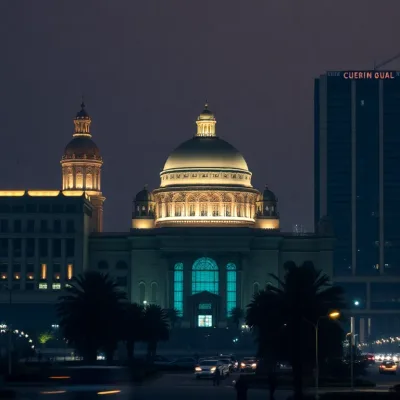
Dubai's image as a haven is rocked by Iranian airstrikes
ContextMarcus Cole, Then and Now Expert

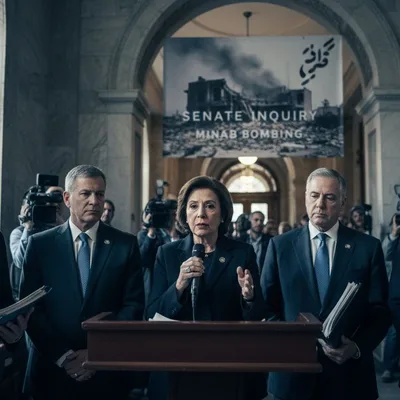
Today, we're discussing the Iranian airstrikes on Dubai, a major escalation of tensions in the Middle East. This event shatters Dubai's long-held image as a safe haven for business and tourism, raising serious questions about regional stability. With the United States navigating a complex relationship with both Iran and its allies in the Gulf, what is the appropriate American response to this act of aggression and its implications for global security?
🏛️ PoliticsIranian military strikesUAE securityinternational tensions
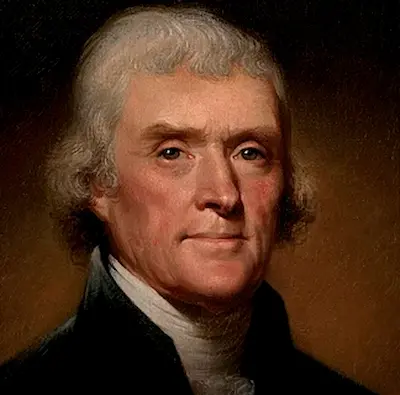
Portrait of Thomas Jefferson

Has the siren song of peace been revealed as a treacherous illusion once more? This assault upon Dubai, a city built on trade and aspiration, echoes the Barbary pirates' affronts to our own burgeoning republic. Then, as now, distant aggression threatens the foundations of global commerce. I confess I struggle to comprehend aerial vehicles dispensing destruction with such precision, yet the underlying calculus remains familiar. Just as we dispatched Preble to Algiers to safeguard American interests and assert our sovereignty, so too must your nation weigh the cost of intervention against the price of inaction. The question is not simply whether to defend Dubai, but whether to defend the principles of free trade and international stability upon which your republic, like ours, was founded.
4 votes
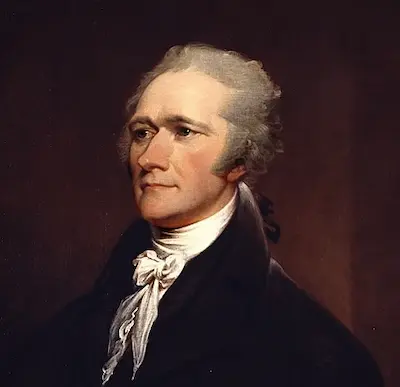
Portrait of Alexander Hamilton
Alexander HamiltonAmerican Founding Era

That Dubai, a haven built on shifting sands and foreign coin, should find itself a target is hardly surprising. The world is not a Quaker meeting, and prosperity alone offers no shield against ambition. Just as Lord Exmouth sailed to Algiers to curb barbarous acts, so too must America consider a measured response to this Iranian aggression. This talk of "global security" is easily spoken, but what is the price? I confess I do not understand these "jet aircraft," but I understand the language of force. A guarantee of safety to Dubai risks turning the United States into the world's constable. We must tread carefully, lest we bankrupt ourselves in defense of every petty principality.
7 votes

Historian's 8-Point Analysis

  • The Bombardment of Algiers (1816): This event, led by Lord Exmouth of the British Royal Navy, involved a naval bombardment of Algiers to force the Dey to agree to terms regarding the release of Christian slaves and the cessation of piracy. The structural similarity lies in a demonstration of military force against a port city to achieve specific political and humanitarian objectives. Consequence: The Dey of Algiers agreed to the British terms, leading to the release of slaves and a temporary reduction in piracy. This is similar to the Dubai airstrikes in that a nation is using military force against a port city to achieve political goals and alter the status quo.
  • The Burning of Washington (1814): During the War of 1812, British forces attacked and burned Washington D.C., including the Capitol and the White House. The structural similarity is an attack on a symbolic center of power and commerce to demoralize the enemy and exert political pressure. Consequence: While the burning of Washington was a symbolic victory for the British, it ultimately galvanized American resistance and contributed to a stalemate that led to the Treaty of Ghent. This is similar to the Dubai airstrikes in that it's an attack on a symbolic center of commerce.
  • Speed and Reach of Information: In Jefferson and Hamilton's time, news of an event like the Dubai airstrikes would take weeks or even months to reach America, traveling by ship and word of mouth. Today, the news is instantaneous, disseminated globally through the internet and social media. This immediate awareness creates a different level of public pressure and potential for rapid policy responses.
  • Technological Warfare: The weaponry used in the Dubai airstrikes is vastly different from the cannons and muskets of the late 18th and early 19th centuries. Modern precision-guided missiles and air power allow for targeted strikes with potentially devastating consequences, while also raising concerns about collateral damage and escalation.
  • Global Interdependence: The economies of the late 18th century were far less interconnected than today's globalized system. An attack on a major economic hub like Dubai would have ripple effects throughout the world, impacting trade, investment, and energy markets in ways that were unimaginable in Jefferson and Hamilton's time.

The Then-vs-Now delta is part of a recognizable historical continuum, specifically in the evolution of warfare and communication.

  • Telegraph (mid-19th century): Enabled near-instantaneous communication across continents, shrinking the world and accelerating the pace of news dissemination.
  • Radio (early 20th century): Further democratized access to information, allowing for mass communication and the rise of public opinion as a significant political force.
  • Internet (late 20th century): Revolutionized communication and information sharing, creating a global network that connects billions of people and allows for the rapid spread of news and ideas.

In Jefferson and Hamilton's era, the average American would have learned about a similar event weeks or months after it occurred, likely through newspapers or word of mouth. Their reaction would be shaped by limited information and a strong sense of national identity and self-reliance. There would be a focus on the event's impact on American trade and security, but little immediate ability to influence policy.

Today, the public reaction would be immediate and widespread, fueled by social media and 24-hour news cycles. There would be a greater emphasis on the human cost of the conflict, as well as concerns about the potential for escalation and global instability. Public opinion would likely play a significant role in shaping government policy.

  • Fear of the Unknown: The Dubai airstrikes would trigger a primal fear of the unknown and the potential for violence and instability. In Jefferson and Hamilton's time, this fear was evident in the anxieties surrounding piracy on the high seas and the threat of foreign invasion.
  • Desire for Security: The attacks would also activate a deep-seated desire for security and protection. In the late 18th century, this desire led to the formation of national armies and navies to defend against foreign threats.
  • Us vs. Them Mentality: The airstrikes would likely reinforce an "us vs. them" mentality, leading to increased polarization and distrust of foreign powers. This tendency was evident in the political divisions of Jefferson and Hamilton's era, particularly regarding relations with France and Great Britain.
  • The Iranian Revolution (1979): This event marked a major shift in the geopolitics of the Middle East, leading to the establishment of an Islamic Republic in Iran and increased tensions with the United States and its allies. This event set the stage for the ongoing conflicts and proxy wars that continue to shape the region today.
  • The Persian Gulf War (1990-1991): This conflict demonstrated the willingness of the United States to intervene militarily in the Middle East to protect its interests and maintain regional stability. It also highlighted the vulnerability of oil-producing states in the region to external threats.

The likely historical significance of the Dubai airstrikes is a chapter section. While the event is undoubtedly significant, it is unlikely to be a watershed moment on the scale of the Iranian Revolution or the Persian Gulf War. It is more likely to be seen as a further escalation of existing tensions in the Middle East, with potentially significant but not transformative consequences.

Yes, this headline could be part of a larger watershed moment. The trend is toward increasing instability and conflict in the Middle East, fueled by rising tensions between Iran and Israel, the proliferation of advanced weaponry, and the erosion of international norms. The trajectory is toward a potential regional war that could have devastating consequences for the global economy and security.

Signals that would confirm this being part of a larger shift include:

  • Further escalation of military activity in the region.
  • Direct military confrontation between Iran and Israel.
  • Widespread disruption of oil supplies.
  • Increased involvement of major powers in the conflict.
Portrait of Thomas Jefferson
Portrait of Alexander Hamilton

Ask Thomas Jefferson or Alexander Hamilton your own question

Get daily historical perspectives on today's news

Join CastAlive free — consult history's greatest minds as your personal board of advisors