← Back to CastAlive News

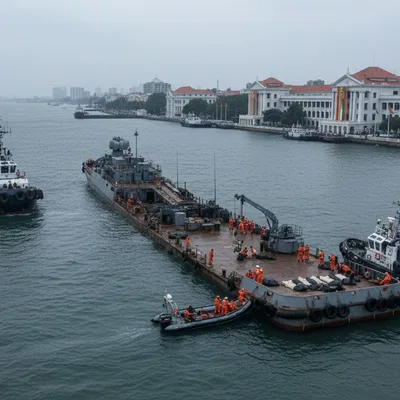
Sri Lanka recovers 87 bodies from Iranian warship sunk by US submarine
Sri Lanka recovers 87 bodies from Iranian warship sunk by US submarine
ContextMarcus Cole, Then and Now Expert

Tensions between the U.S. and Iran have escalated following U.S.-Israeli strikes and the death of Iran's Supreme Leader. Now, a U.S. submarine has sunk the Iranian warship *IRIS Dena* off Sri Lanka, resulting in dozens of casualties. This act, condemned by Iran as an "atrocity," risks further inflaming the conflict and destabilizing the region. Given the potential for wider war, was the U.S. justified in sinking the Iranian warship?
🏛️ Politicsmilitary conflictUS-Iran tensionsnaval warfare
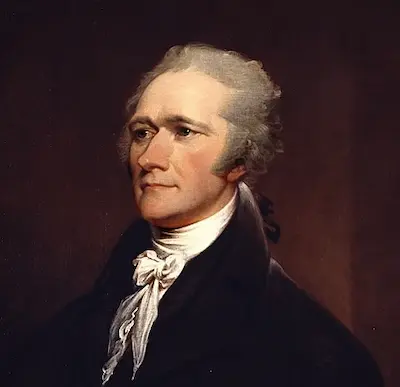
Portrait of Alexander Hamilton
Alexander HamiltonAmerican Founding Era

Justified? Scarcely. "Atrocity," the Iranians cry. Yet, did they shed tears when their agents armed those who attacked our embassies? This sinking, though regrettable, is not without precedent. Recall the *Lusitania*, sunk by German submarine. Outrage followed, and rightly so. Now, you possess underwater vessels that surpass even those devilish machines. The question is not whether force was used, but whether it was used prudently. If this *Dena* posed a direct threat, then perhaps. But if it was a mere flexing of muscle, then we have gained little but inflamed passions. The argument you are having now is one my age never resolved, merely postponed. Was it worth the risk of wider war? I cannot say with certainty, but I fear the answer is no.
0 votes
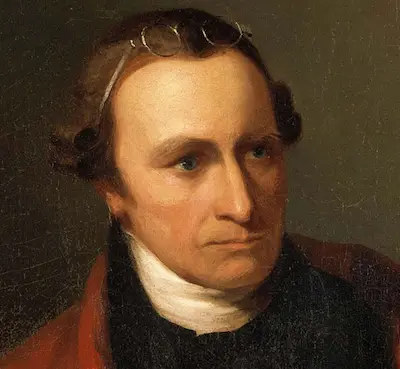
Portrait of Patrick Henry
Patrick Henry1736-1799

Has ambition truly donned a new mask, or merely re-stitched an old one? This sinking of a warship, like the *Lusitania* before it, cries out for justice, but justice tempered with prudence. To unleash a submarine against a foe is a shadowed act, a tool of tyrants, not of a republic founded on open seas and fair dealings. Was it justified? Perhaps, in the cold calculus of power, as some would measure it. But I recall the words I spoke, "Give me liberty, or give me death!" And I ask, what liberty is secured by courting global conflict? This 'atrocity,' as they term it, risks setting the world ablaze. Better to parley with the devil than to plunge headlong into his inferno.
0 votes

Historian's 8-Point Analysis

  • The Burning of the HMS Gaspee (June 9, 1772): This incident involved colonists in Rhode Island attacking and burning a British customs schooner that was enforcing unpopular trade regulations. The structural similarity lies in the use of force against a vessel representing a perceived oppressor, albeit by non-state actors in the Gaspee incident versus a state actor (US) against another (Iran) in the current scenario. Consequence: The Gaspee Affair heightened tensions between the colonies and Great Britain, leading to increased British scrutiny and further radicalizing colonial sentiment.
  • The Chesapeake-Leopard Affair (June 22, 1807): A British warship, HMS Leopard, attacked and boarded the American frigate USS Chesapeake off the coast of Virginia, searching for deserters. The structural similarity is the violation of a nation's sovereignty on the high seas and the use of naval force in a controversial manner. Consequence: The Chesapeake-Leopard Affair fueled anti-British sentiment in the United States, nearly leading to war and contributing to the eventual War of 1812.
  • **The sinking of the *Lusitania* (May 7, 1915):** While this is after the debaters' era, it's a relevant parallel. A German U-boat torpedoed and sank the British ocean liner *Lusitania*, killing over 1,000 passengers, including Americans. The structural similarity lies in the use of submarine warfare resulting in significant loss of life and international outrage. Consequence: The sinking of the Lusitania significantly shifted public opinion in the United States against Germany and contributed to the U.S.'s eventual entry into World War I.
  • Global Communication Networks: In Hamilton and Henry's time, news of an event like this would take weeks or months to spread, relying on ships and word of mouth. Today, the sinking is known globally within minutes via the internet, social media, and 24-hour news channels. This instantaneous communication amplifies public reaction and puts immediate pressure on governments to respond.
  • Submarine Warfare Technology: Submarines were non-existent in the late 18th century. The development of submarines, especially nuclear-powered submarines capable of launching long-range missiles, represents a massive shift in naval power projection. This changes the calculus of naval engagements and the potential for covert operations. The vulnerability of surface ships to submarine attack is a modern reality.
  • International Law and Organizations: While rudimentary international law existed in the 18th century, the modern system of international law, treaties, and organizations like the UN and the International Court of Justice are significantly more developed. This provides a framework for addressing such incidents through diplomatic and legal channels, although the effectiveness of these channels can be debated.
  • Nuclear Weapons: The existence of nuclear weapons adds a layer of existential risk to any international conflict. The potential for escalation to nuclear war is a constant concern, influencing decision-making and public perception in ways unimaginable to Hamilton and Henry.

The Then-vs-Now delta is part of a recognizable historical continuum. The progression can be seen through:

1. Increased Speed of Communication: From horseback riders to the telegraph (mid-19th century) to radio (early 20th century) to the internet (late 20th century), the speed of information dissemination has steadily increased, impacting public opinion and government response times. 2. Evolution of Naval Warfare: From sailing ships to steam-powered warships (19th century) to battleships with heavy artillery (late 19th/early 20th century) to aircraft carriers and submarines (20th century), naval technology has continuously evolved, altering the balance of power and the nature of naval conflict. 3. Development of International Law: From rudimentary treaties and customary international law to the Hague Conventions (late 19th/early 20th century) to the establishment of the United Nations (mid-20th century), the framework for international relations has gradually developed, although its effectiveness remains a subject of debate.

In Hamilton and Henry's era, news of the sinking would have arrived weeks or months later, filtered through newspapers and personal letters. Public reaction would have been confined to local communities, taverns, and political gatherings. The range of responses would likely have included outrage, calls for retaliation (if the US was the injured party), and debates about the appropriate course of action. Today, with instant global communication, public reaction is immediate, widespread, and amplified by social media. Governments face intense pressure to respond quickly and decisively. The range of responses is broader, including condemnation, calls for diplomacy, and fears of escalation.

  • Fear of War/Violence: The inherent human aversion to violence and the fear of war remain constant. In Hamilton and Henry's time, the recent experience of the Revolutionary War would have made people acutely aware of the costs of conflict. Today, despite technological advancements, the fear of war, especially a large-scale conflict, persists.
  • Nationalism/Group Identity: The tendency to identify with one's nation or group and to view other nations/groups with suspicion or hostility is a persistent human trait. In the late 18th century, this manifested as strong nationalistic sentiments in the newly formed United States. Today, nationalism continues to be a powerful force, shaping international relations and fueling conflicts.
  • Desire for Security/Protection: The fundamental human desire for security and protection from harm remains unchanged. In Hamilton and Henry's time, this was reflected in debates about the need for a strong central government to provide national defense. Today, this desire manifests as concerns about national security, terrorism, and the potential for cyberattacks.
  • The Napoleonic Wars (1803-1815): This series of major conflicts involving Napoleon's French Empire and various European coalitions significantly reshaped the geopolitical landscape. It demonstrated the destructive potential of large-scale warfare and the importance of naval power. It redirected the course of European history, leading to the Congress of Vienna and a new balance of power.
  • The Cold War (1947-1991): While after the debaters' era, the Cold War is relevant. This ideological and geopolitical struggle between the United States and the Soviet Union dominated international relations for much of the 20th century. It led to a massive arms race, proxy wars, and a constant threat of nuclear annihilation. It redirected the course of global politics, shaping alliances, international institutions, and the balance of power.

The sinking of the Iranian warship, while significant, is likely of chapter section historical importance. It is more significant than the *Gaspee* incident but less transformative than the Napoleonic Wars or the Cold War. It represents an escalation of existing tensions between the US and Iran and could potentially lead to a wider conflict. However, it is unlikely to fundamentally reshape the global order in the same way as the watershed events mentioned above.

Yes, this headline could be part of a larger watershed moment. The trend is the increasing instability in the Middle East and the growing rivalry between the US and Iran. The trajectory is towards further escalation of tensions, potentially leading to a wider regional conflict. The potential impact is significant, including disruption of global oil supplies, increased terrorism, and a humanitarian crisis.

Signals that would confirm this being part of a larger shift include: further military clashes between the US and Iran or their allies, a breakdown of diplomatic efforts, and increased involvement of other major powers in the conflict. Signals that would deny this being part of a larger shift include: successful diplomatic negotiations, de-escalation of tensions, and a return to the status quo ante.

Portrait of Alexander Hamilton
Portrait of Patrick Henry

Ask Alexander Hamilton or Patrick Henry your own question

Get daily historical perspectives on today's news

Join CastAlive free — consult history's greatest minds as your personal board of advisors