← Back to CastAlive News

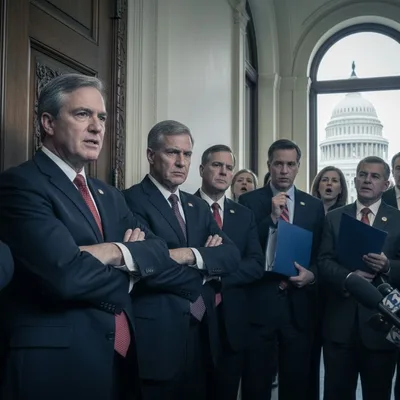
Trump pushes GOP on voting bill and demands end to most mail balloting
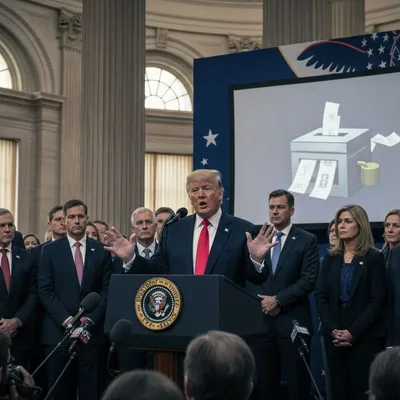
Trump pushes GOP on voting bill and demands end to most mail balloting
ContextMarcus Cole, Then and Now Expert

Former President Trump is pressuring Republicans to pass a federal voting bill, including demands for voter ID and ending most mail-in ballots, citing election security concerns. This intensifies the existing partisan divide over voting rights, with Democrats arguing such measures suppress voter turnout. The core tension lies in balancing election integrity with accessibility. Should the federal government impose stricter voting requirements, potentially impacting voter participation, or should states maintain autonomy over election laws?
🏛️ Politicsvoting legislationmail ballotingelection policylegislative leverage
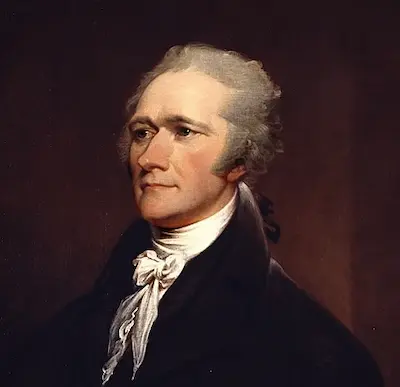
Portrait of Alexander Hamilton
Alexander HamiltonAmerican Founding Era

That the specter of faction continues to haunt this nation, even across the chasm of centuries, is a testament to its enduring power. This clamor for federal intervention in what has traditionally been the domain of the states smacks of overreach, not unlike the Alien and Sedition Acts, which sought to silence dissent under the guise of national security. Are these "election security concerns" genuine, or merely a pretext to suppress the voices of those who oppose the current administration? The speed with which pronouncements now travel – these "social media" you speak of – amplifies both truth and falsehood, making discernment all the more critical. Let the states manage their own affairs, lest we create a leviathan that devours the very liberties it purports to protect.
0 votes
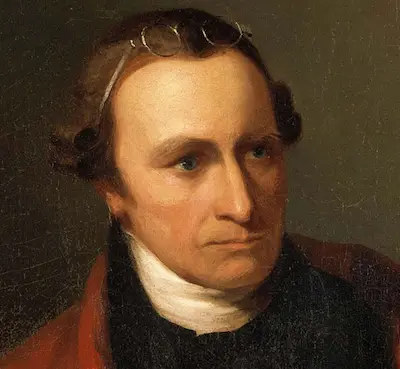
Portrait of Patrick Henry
Patrick Henry1736-1799

Hath the spirit of '98 returned to haunt these shores? Then, as now, cries of security serve as a flimsy veil for the consolidation of power. This insistence upon federal control over elections, this "voting bill," smacks of the Alien and Sedition Acts, wherein the Federalists sought to silence dissent under the guise of national interest. You speak of "mail-in ballots" as a threat. Yet, were not letters carried across vast distances in my day, containing not only news but also the very lifeblood of commerce and connection? Are we to now fear the postman as a harbinger of corruption? The question is not whether election integrity is important, but whether the proposed measures are a sincere attempt to secure it or a cynical ploy to suppress the voices of those who disagree.

0 votes

Historian's 8-Point Analysis

  • The Alien and Sedition Acts (1798): This series of laws passed by the Federalist-controlled Congress under President John Adams restricted immigration and curtailed criticism of the government. Structural Similarity: Both the Alien and Sedition Acts and the contemporary voting bill reflect a perceived threat to the existing political order and an attempt to use legislative power to solidify that order. In 1798, it was fear of French influence and Republican dissent; today, it's concerns about election integrity and the potential for voter fraud. Consequence: The Alien and Sedition Acts were deeply unpopular, fueled the rise of the Democratic-Republican party, and contributed to Thomas Jefferson's victory in the 1800 election, leading to their eventual repeal or expiration.
  • The Mississippi Plan (1875): This was a coordinated effort by white Democrats in Mississippi to suppress Black voters through violence, intimidation, and fraud. Structural Similarity: While the contemporary voting bill doesn't involve violence, the *potential* impact of stricter voting requirements on specific demographics mirrors the Mississippi Plan's intent to disenfranchise a particular group (in this case, potentially minority and low-income voters, though the bill's proponents would deny such intent). Consequence: The Mississippi Plan successfully suppressed Black voting and helped restore Democratic control in Mississippi, setting a precedent for similar disenfranchisement efforts across the South for decades.
  • Mass Media & Information Dissemination: In Hamilton and Henry's time, news traveled slowly via newspapers, pamphlets, and word of mouth. Today, information spreads instantly through social media, 24-hour news channels, and the internet. This instantaneous dissemination amplifies the impact of Trump's statements and the voting bill, allowing for rapid mobilization of support and opposition.
  • Federal Power & Scope: The federal government in the late 18th century was significantly weaker and less involved in state affairs than it is today. The expansion of federal power, particularly after the Civil War and the New Deal, means that federal voting legislation has a much broader reach and impact than anything conceivable in Hamilton and Henry's time.
  • Universal Suffrage: While suffrage was limited to white, male landowners in the Founding Era, today, at least in theory, suffrage is universal for citizens over 18. This difference means that any attempt to restrict voting access is viewed through the lens of potential disenfranchisement of a much larger and more diverse electorate.

The Then-vs-Now delta is part of a recognizable historical continuum regarding voting rights.

  • Early Republic: Limited suffrage based on property ownership and race.
  • Jacksonian Era: Expansion of suffrage to all white men, regardless of property.
  • Reconstruction Era: 15th Amendment grants Black men the right to vote (though often suppressed).
  • 20th Century: Women's suffrage (19th Amendment), Voting Rights Act of 1965, lowering the voting age to 18 (26th Amendment).

This continuum shows a gradual expansion of voting rights, punctuated by periods of resistance and retrenchment. The current debate over voting legislation can be seen as a continuation of this struggle, with proponents arguing for election security and opponents arguing for protecting access to the ballot box.

In Hamilton and Henry's era, the average citizen would have likely been less directly affected by a similar event, primarily because voting was restricted to a small segment of the population. News would have spread slowly, primarily through printed materials and word-of-mouth, and public reaction would have been largely confined to the educated elite and those directly involved in politics. Today, the average person would be bombarded with information about the voting bill from various sources, including social media, news websites, and television. Public reaction would be immediate, widespread, and highly polarized, with individuals expressing their opinions through online forums, protests, and contacting their elected officials.

  • Factionalism: The tendency to form groups based on shared interests and beliefs. In the Founding Era, this was evident in the emergence of the Federalist and Anti-Federalist factions. Technology/culture hasn't altered this fundamental trait; it has simply provided new platforms and avenues for factionalism to manifest.
  • Fear of the "Other": The suspicion and distrust of those perceived as different or threatening. In the late 18th century, this was evident in the fear of foreign influence and the potential for internal subversion. Today, this fear manifests in concerns about illegal immigration, voter fraud, and the erosion of national identity. Technology/culture hasn't eliminated this fear; it has simply amplified it through echo chambers and misinformation.
  • Desire for Power: The inherent human drive to acquire and maintain influence. In Hamilton and Henry's time, this was evident in the struggle for control of the newly formed government. Today, this desire manifests in the pursuit of political office, the lobbying of elected officials, and the manipulation of public opinion. Technology/culture hasn't diminished this desire; it has simply provided new tools and strategies for achieving it.
  • The Voting Rights Act of 1965: This landmark legislation outlawed discriminatory voting practices, such as literacy tests, that had been used to disenfranchise Black voters in the South. It fundamentally altered the landscape of voting rights in the United States and led to a significant increase in Black voter registration and participation.
  • Shelby County v. Holder (2013): The Supreme Court struck down Section 4(b) of the Voting Rights Act, which determined which states and jurisdictions with a history of voting discrimination needed federal preclearance before changing their voting laws. This decision led to a wave of new voting restrictions in many states, prompting renewed debate about voter suppression and election integrity. This decision marked a shift away from federal oversight of voting rights and towards greater state control.

The headline "Trump pushes GOP on voting bill and demands end to most mail balloting" is likely of chapter section historical importance. While it reflects a significant moment in the ongoing debate about voting rights and election integrity, it is unlikely to have the transformative impact of the Voting Rights Act of 1965 or the disruptive effect of *Shelby County v. Holder*. It is more likely to be remembered as a specific episode within a larger cycle of political maneuvering and legislative battles over voting access.

Yes, this headline could be part of a larger watershed moment. The trend is towards increasing polarization around voting rights and election administration, with one side emphasizing election security and the other emphasizing voter access. If this trend continues, it could lead to further restrictions on voting access in some states, potentially disenfranchising certain groups of voters and further exacerbating political divisions. Signals that would confirm this being part of a larger shift include: (1) widespread adoption of similar voting restrictions in multiple states; (2) a significant decline in voter turnout, particularly among minority and low-income voters; (3) further legal challenges to existing voting laws; and (4) increased political mobilization around voting rights issues.

Portrait of Alexander Hamilton
Portrait of Patrick Henry

Ask Alexander Hamilton or Patrick Henry your own question

Get daily historical perspectives on today's news

Join CastAlive free — consult history's greatest minds as your personal board of advisors